



Electric Interurban Railway in Chagrin Falls, Ohio
The arrival of the electric interurban railway in Chagrin Falls, Ohio, transformed transportation and commerce throughout the community. Beginning in the 1890s, electric railways offered residents a fast and convenient alternative to traditional steam railroads, connecting Chagrin Falls with Cleveland and communities throughout Northeast Ohio.
Plans for an Electric Railway to Chagrin Falls
In 1893, The Exponent announced the imminent arrival of an electric railway in Chagrin Falls. The project was undertaken by the Everett and Moore Syndicate, a prominent electric railway company involved in developing interurban transportation in Northeast Ohio.
The ambitious project required considerably more than simply laying railroad tracks. Construction crews installed rail lines and overhead electrical wires between Cleveland and Chagrin Falls. A coal-fired powerhouse was also constructed on Fenkell Road, now known as Miles Road, approximately one-half mile west of Solon Road.
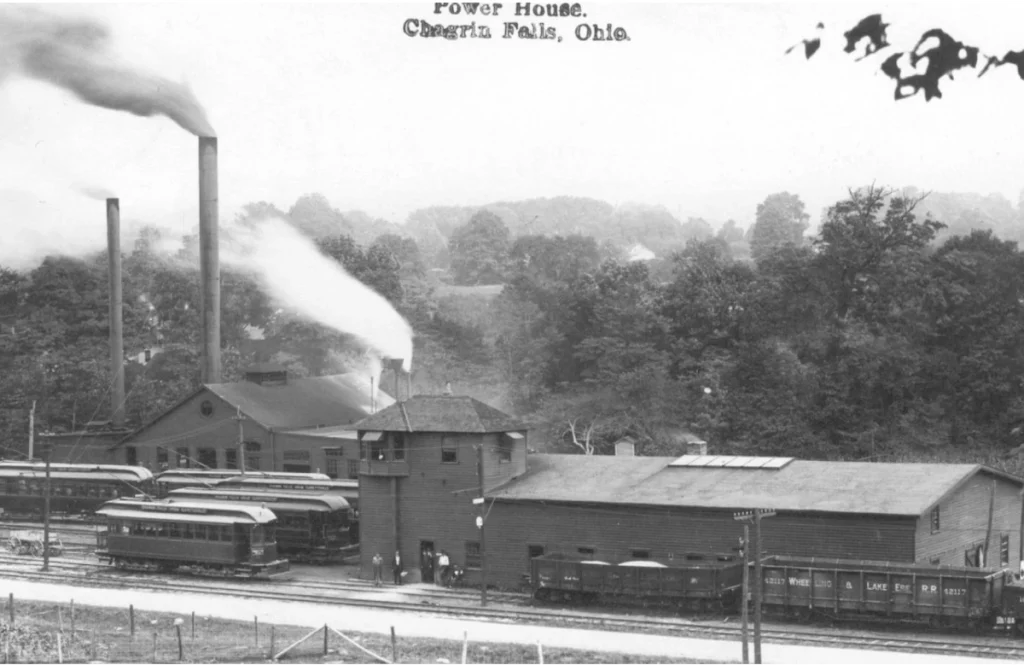
Two bridges spanning the Chagrin River were also required to complete the route, making the project a significant engineering undertaking for the era.
The Cleveland and Chagrin Falls Electric Railway Begins Service
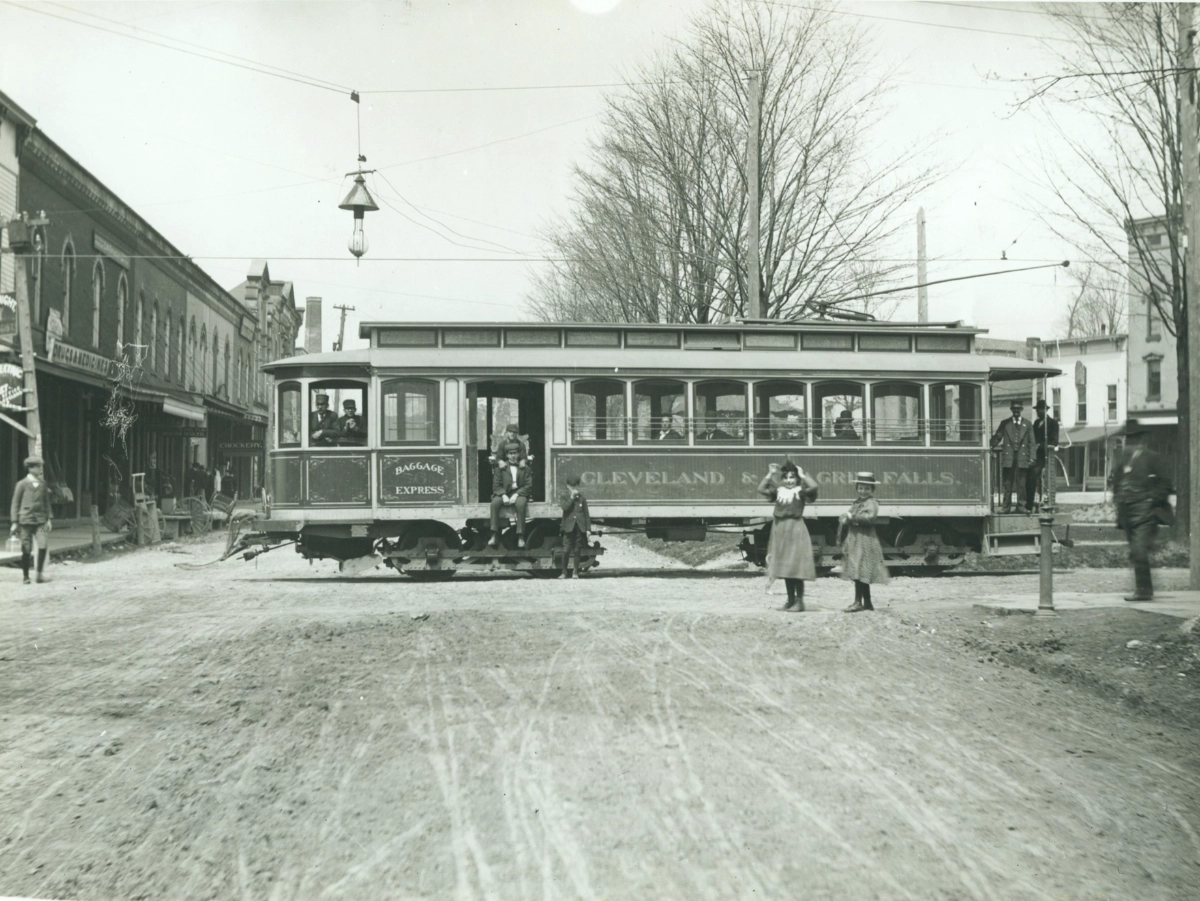
The Cleveland and Chagrin Falls Electric Railway (C&CFER) officially began operations in 1897. The new electric railway carried much more than passengers. Its cars transported mail, produce, freight, and other goods, quickly making the railway an important part of daily life in Chagrin Falls.
For local residents, the electric railway provided a level of mobility that had previously been unavailable. Commuters could travel to Cleveland for work, while farmers used the railway to transport produce and other goods. Tourists and visitors could also reach Chagrin Falls more easily, helping increase activity in the village.
A Fast Connection Between Chagrin Falls and Cleveland
One of the railway’s greatest advantages was speed. The electric trains could travel between Chagrin Falls and Cleveland in approximately 30 minutes, if no stops were made along the way. This made regular travel between the two communities practical for the first time.
The railway became an important transportation link for people throughout the region. Residents could commute, shop, conduct business, or simply travel for entertainment and recreation without relying on horse and buggy or steam railroad connections.
Expansion Into Northeast Ohio
The success of the electric railway led to expansion beyond Chagrin Falls. Tracks were eventually extended to communities including Hiram and Garrettsville, creating a broader interurban transportation network.
The expanding railway helped stimulate economic development throughout Northeast Ohio. Towns along the route benefited from improved access to people, products, businesses, and markets. The electric railway became more than a transportation system—it was an important force in the growth and development of the communities it served..
Life Along the Interurban Railway
For many Chagrin Falls residents, the electric railway became a familiar and essential part of everyday life. Streetcars and interurban trains moved continuously through the community, carrying workers, shoppers, farmers, tourists, mail, and freight.
The railway also helped make Chagrin Falls a more accessible destination for visitors from Cleveland and surrounding communities. Increased accessibility contributed to the town’s reputation as a popular destination for recreation and tourism.
Accidents and Challenges on the Electric Railway
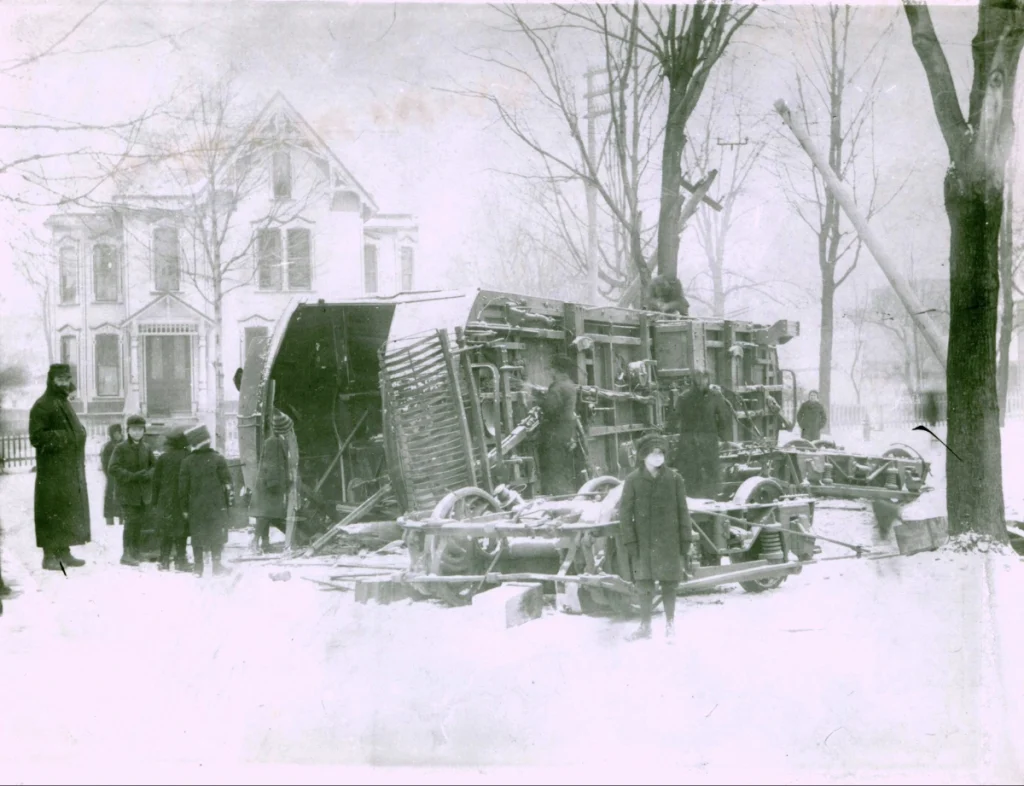
Despite its many advantages, operating an electric railway was not without problems. The C&CFER experienced a number of mishaps during its years of operation.
Among the incidents were head-on train collisions, accidents involving pedestrians, lengthy delays caused by severe weather, and trains leaving the tracks. These incidents demonstrated some of the challenges associated with operating an expanding electric railway system during the early 20th century.
The Decline of the Chagrin Falls Electric Railway
By the 1920s, transportation technology was changing rapidly. The construction of improved highways, combined with the growing popularity of automobiles, trucks, and buses, created increasing competition for the electric railway.
As more people purchased automobiles and freight increasingly moved by truck, the C&CFER’s passenger and freight business declined significantly.
After nearly three decades of service, the Cleveland and Chagrin Falls Electric Railway ceased operations in 1925.
The End of an Era in 1925
At midnight on March 31, 1925, electricity to the railway route was shut off for the final time. With the power disconnected, the 27-year era of electric interurban transportation in Chagrin Falls came to an end.
The railway barns that once housed the trolley cars remained for several years after the line closed. They were eventually demolished in the late 1930s, removing another visible reminder of Chagrin Falls’ electric railway era.
The Legacy of Chagrin Falls’ Electric Railway
The Cleveland and Chagrin Falls Electric Railway played a significant role in the history of Chagrin Falls and Northeast Ohio. For nearly three decades, it connected the community with Cleveland and surrounding towns, transported passengers and freight, encouraged tourism, and helped stimulate regional economic development.
Although the trolley tracks and overhead wires have long disappeared, the electric railway remains an important part of Chagrin Falls history. Its arrival represented the community’s transition into a new age of transportation—one in which electricity, rather than steam, powered the trains that connected Chagrin Falls to the growing world around it.