



Old Aunty of Chagrin Falls: A Symbol of Freedom and Community
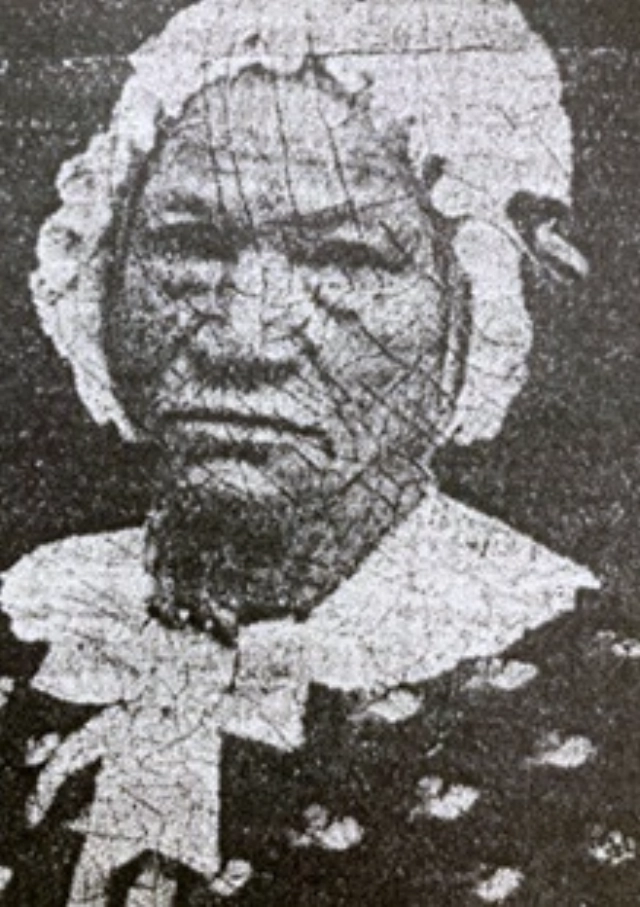
One of the most beloved and memorable figures in the history of Chagrin Falls was a woman known simply as “Old Aunty.” Her life story reflects both the hardships of slavery and the welcoming spirit of a community deeply connected to the abolitionist movement and the Underground Railroad.
From Slavery in Virginia to Freedom in Ohio
Old Aunty’s given name was Dorcus Ann Elizabeth Williams. Born into slavery in Virginia, she endured the harsh realities of bondage, including being forced by her owner into a marriage with another enslaved person. Determined to claim her freedom, she escaped and made her way north.
After reaching Oberlin, Ohio, a well-known center of abolitionist activity, she learned about the village of Chagrin Falls from another freedom seeker. Sometime during the early 1850s, she arrived in the village and settled in a small shack at the corner of Main and Cottage Streets. She later moved to a home on High Street near the mill pond and Whitesburg.
Chagrin Falls and the Abolitionist Movement
Long before the Civil War, Chagrin Falls had developed a reputation as a community sympathetic to the anti-slavery cause. Evidence of local abolitionist activity dates back to at least 1838, when Lorenzo Dow (L.D.) Williams mentioned the movement in a letter to his father.
L.D. Williams was a prominent educator who established one of the village’s earliest secondary schools in a building at 55 West Washington Street. In 1842, he became the first director of Asbury Seminary, the institution that later occupied the site of today’s Chagrin Falls Intermediate School.
Anti-Slavery Leaders in Chagrin Falls
The strength of abolitionist sentiment in Chagrin Falls can be seen through subscriptions to The Anti-Slavery Bugle, a newspaper published in Salem, Ohio, from 1845 to 1861. Research conducted by Chagrin Falls Historical Society archivist Laura Gorretta identified numerous local subscribers, including:
- W.W. Vincent
- J.N. Bliss
- Milton Bliss
- Polly Saunderson
- Dr. J.H. Vincent
- Henry Church Sr.
- Adin Gaunt
- William Waldron
- Charles Waldron
- John W. Williams
The village also hosted several anti-slavery meetings before the Civil War. Records document gatherings in 1846, a two-day convention in 1848, and a major meeting in 1854 featuring nationally known abolitionist Charles C. Burleigh.
Chagrin Falls and the Underground Railroad
Many residents of Chagrin Falls played active roles in assisting freedom seekers traveling north through the Underground Railroad.
Among those known to have helped escaped slaves were:
- Dr. Justus Vincent
- Isaac Rarick, whose farm stood on Bell Street
- Henry Church, whose home was located on West Orange Street
- Harvey W. Curtiss
- John Williams
Harvey W. Curtiss was particularly active in the movement, organizing meetings for the Western Abolition Society before attending medical school.
The Church Family’s Role
The Church family left some of the most vivid accounts of Underground Railroad activity in Chagrin Falls. Both Jane Church and Austin Church later recalled that fugitive slaves frequently passed through their family home.
Freedom seekers often arrived after dark, remained hidden during the day, and continued their journey the following night. Austin Church remembered always knowing when guests were being sheltered because there would be noticeably less food available at breakfast.
One memorable story involved a fugitive who had formerly been enslaved by Henry Clay of Kentucky. After helping the man reach safety in Canada, Henry Church sent Clay a letter informing him that his former slave was secure and free. Church humorously noted that he had simply “forgotten” to return him to Kentucky.
The Methodist Church and the Fight Against Slavery
The issue of slavery divided many American churches, including the Methodist denomination.
In Chagrin Falls, numerous church members embraced the teachings of John Wesley, who condemned slavery as morally wrong. Several local Methodist ministers became active abolitionists.
As tensions increased, the Wesleyan Methodists separated from the main Methodist congregation and began holding services in the Free Will Baptist Church, located near the intersection of Vincent and Bell Streets.
Life and Work of Old Aunty
The strong abolitionist culture of Chagrin Falls likely contributed to Old Aunty’s acceptance within the community.
She supported herself by washing clothes, performing household chores, and tending a vegetable garden. She was also an enthusiastic fisherman and spent countless hours along the mill pond.
Although neighborhood children were initially cautious around her, they soon grew fond of her. Being invited to fish with Old Aunty became a treasured experience. According to local memories, she taught that the surest way to catch a fish was to spit on the bait and remain perfectly quiet.
A Beloved Village Character
Old Aunty became known throughout Chagrin Falls for her warm smile, infectious laughter, and quick wit.
She shared a playful friendship with both Henry Church and L.O. Harris, who delighted in teasing her. She always responded with a sharp comeback, and the exchanges became a source of amusement for everyone involved.
She was also a familiar face at dances held at the Union House, once located at the base of Grove Hill. For special occasions, she dressed elegantly in silk headwear, often decorated with feathers. Younger residents especially enjoyed watching her perform traditional Southern dances and hoedowns.
Her Final Years
No one knew Old Aunty’s exact age, though she already appeared elderly when she arrived in Chagrin Falls. As she grew older, residents became increasingly concerned about her welfare.
Though fiercely independent and reluctant to accept assistance, she eventually agreed to live with Mrs. Lucy Goodwin, who cared for her in her later years.
Old Aunty died in the early 1870s and was believed to have been approximately 80 years old.
The Famous Tooth-Pulling Story
One of the most frequently repeated stories about Old Aunty involved a visit to local dentist Dr. Phelps.
Convinced that a tooth needed to be extracted, she insisted on treatment despite the dentist finding nothing wrong. After repeated attempts, Dr. Phelps could not pull the stubborn tooth and finally gave up.
Old Aunty’s only response was a humorous observation:
“You sure gave that tooth a good twist.”
Remembering Old Aunty
Nearly fifty years after her death, Old Aunty remained one of the most cherished figures in local memory.
On April 24, 1919, the Chagrin Falls Exponent published an article asking readers to share their recollections of her. During the following six weeks, letters poured in from former residents living across the country.
One contributor recalled that on the day Old Aunty died, the church bells of Chagrin Falls were rung 100 times in her honor—a fitting tribute to a woman whose courage, resilience, and spirit left a lasting mark on the village’s history.
Legacy of Old Aunty in Chagrin Falls History
Today, Old Aunty stands as a powerful reminder of Chagrin Falls’ connection to the abolitionist movement, the Underground Railroad, and the broader struggle for freedom in America. Her journey from enslavement in Virginia to becoming one of the most beloved residents of Chagrin Falls embodies both personal resilience and the compassion of a community that helped shape her remarkable story.