


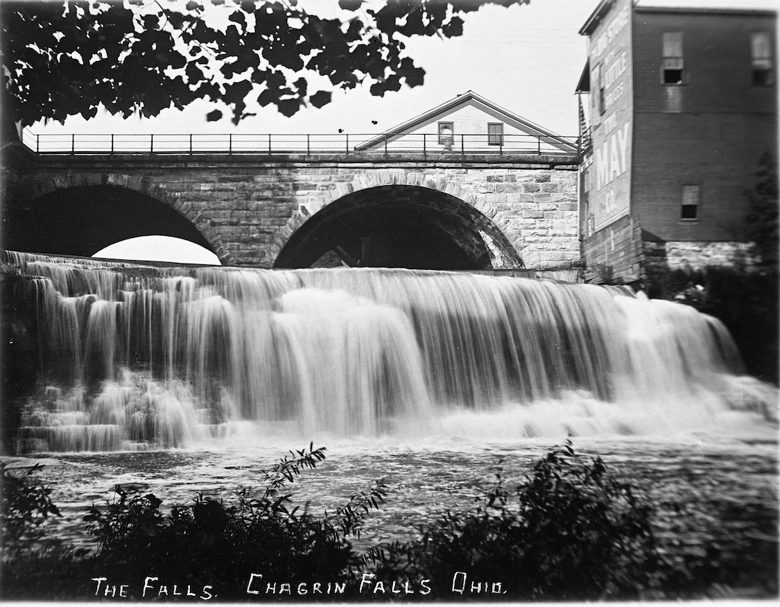

The Historic Heart of Chagrin Falls
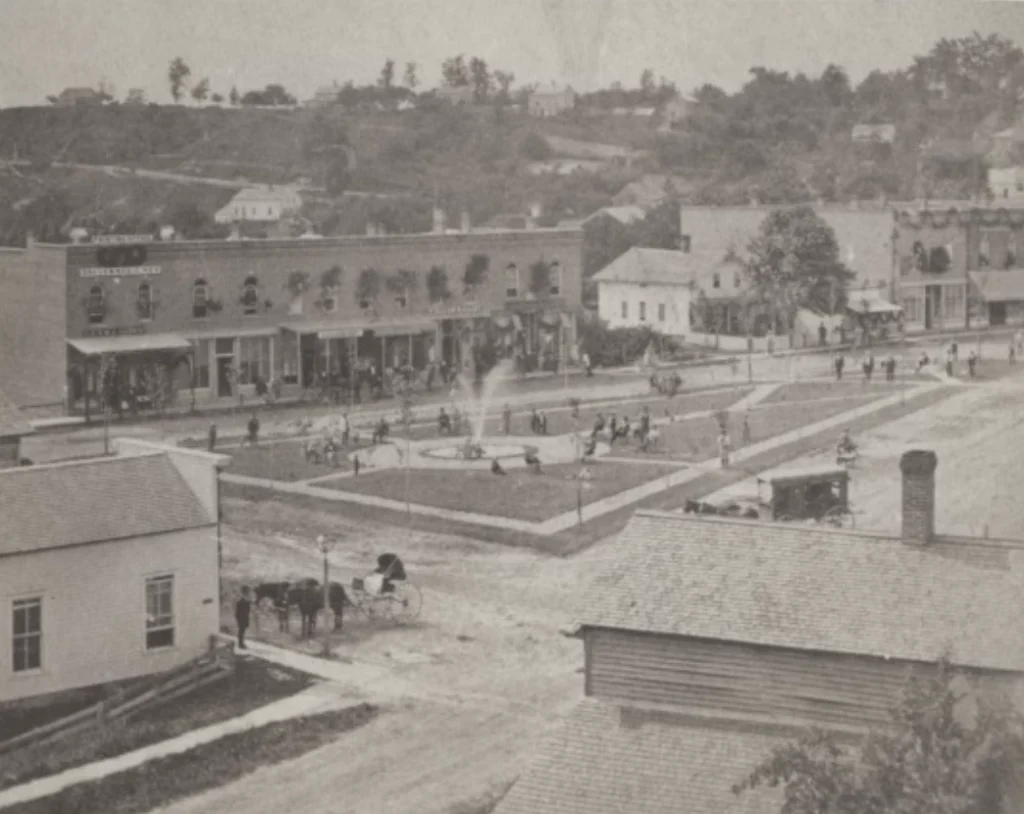
Triangle Park has long served as the civic and social center of Chagrin Falls. Located at the intersection of Main Street, Franklin Street, and Washington Street, this iconic green space has evolved from a swampy tract of land into one of the village’s most recognizable landmarks. Today, Triangle Park remains a gathering place for community celebrations, concerts, memorials, and historic events.
The Origins of Triangle Park
When the village of Chagrin Falls was first laid out by its early settlers, a triangular parcel of land was intentionally created south of the Chagrin River. Bordered by Main Street, Franklin Street, and Washington Street, the area sat lower than the surrounding streets and was crossed by a creek that flowed east to west.
Because of the wet, muddy conditions, residents frequently drove wagons and buggies through the creek to wash away accumulated dirt and dust. The triangle also became home to several early businesses, including an ashery and the Buckeye Carriage Works, owned by James H. Thomas.
Transforming a Swamp into a Community Park
By the early 1870s, village leaders recognized the need to improve the appearance and functionality of the village center. Mayor John W. Williams led efforts to acquire the land and widen both Main Street and Franklin Street while creating a public park.
In January 1873, the Village Council approved negotiations with local businessmen Benajah Williams Jr. and James H. Thomas to purchase the property. Merchants believed the unattractive swampy area hindered economic growth and sought to create a more attractive and prosperous downtown district.
Following the purchase, the Buckeye Carriage Works building was relocated onto Washington Street, the low-lying land was filled, and the creek was enclosed within a culvert. Sidewalks were installed around the perimeter, laying the foundation for the public park that residents enjoy today.
The Twenty-One Maple Trees
One of the earliest beautification projects involved planting twenty-one maple trees around the park’s perimeter. Each tree represented one of Chagrin Falls’ pioneering families, symbolizing the community’s roots and growth.
Decorative features were also added, including:
- An ornamental watering trough at the north end of the park
- Plaques displaying family names
- A flagpole donated by the Republican Club in 1908
- A fountain and reflecting pool that once housed goldfish
These additions helped establish Triangle Park as both a civic landmark and a source of village pride.
The Historic Triangle Park Bandstand
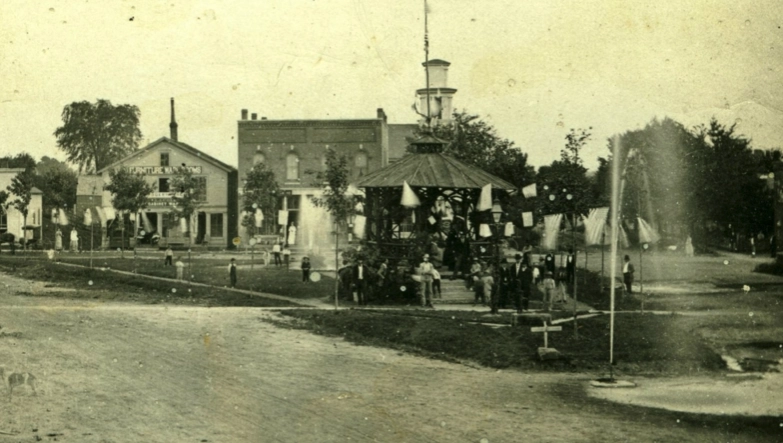
Perhaps the most recognizable feature of Triangle Park is its historic bandstand. In 1877, the Village Council authorized construction of an Adirondack-style bandstand that continues to serve as a focal point of the park today.
The project reflected the growing popularity of the Chagrin Falls Town Band, which had been organized in 1867 by local citizens. The band quickly became a source of entertainment and community spirit, making a permanent performance venue highly desirable.
Unique Architectural Features
The original bandstand featured several distinctive elements:
- A cupola topped with elk antlers placed by Henry Church Jr.
- A three-lamp chandelier designed by Milton Locke of Honeoye Falls, New York
- A decorative lamp post donated by William Stannard
- Limestone foundations
- Rustic construction using tree trunks and grapevines
These features gave the bandstand its unique character and helped make it one of the most distinctive structures in Chagrin Falls.
Preservation and Renovation Through the Years
Like many historic structures, the Triangle Park Bandstand has undergone renovations to preserve its appearance and structural integrity.
During World War II, the bandstand served as a collection point for scrap metal drives supporting the war effort. Following the war, periodic restoration projects ensured that the structure remained safe and functional for future generations.
Today, the bandstand continues to host summer concerts, community performances, and special events, maintaining a tradition that spans nearly 150 years.
Village Rules and Park Protection
In April 1877, the Village Council adopted regulations governing the use of Triangle Park. The ordinance prohibited activities that could damage the park’s landscaping, trees, and grounds.
Restrictions included:
- Damaging grass, shrubs, or trees
- Driving horses, wagons, or animals through the park
- Conducting certain public celebrations without authorization
These early regulations demonstrated the community’s commitment to preserving one of its most important public spaces.
Historic Landmarks Within Triangle Park
Triangle Park contains several notable historic features that connect visitors to Chagrin Falls’ industrial and civic past.
The Millstone Monument
A historic millstone located at the southeast corner of the park once served a mill on the Chagrin River. The millstone was placed in the park in 1920 and remains a reminder of the village’s early milling industry.
Veterans Memorials
Triangle Park has long been associated with patriotic observances and military remembrance.
Important milestones include:
- Celebrations marking the end of World War I in 1918
- Dedication of a World War I veterans monument in 1922
- World War II War Bond rallies held when the park was temporarily renamed Victory Park
- Annual Memorial Day ceremonies
- Fourth of July celebrations honoring veterans and community service
Its central location and historic significance continue to make Triangle Park one of the most visited and beloved destinations in Chagrin Falls.
Visiting Historic Triangle Park Today
Today, Triangle Park remains one of the defining landmarks of downtown Chagrin Falls, Ohio. Surrounded by historic buildings, shops, restaurants, and the village’s famous waterfalls, the park offers visitors a direct connection to nearly two centuries of local history.
Whether attending a summer concert, participating in a community celebration, or simply enjoying the beauty of the village center, visitors experience a location that has been at the heart of Chagrin Falls since the 1870s.