



Grove Hill: An Important Part of Chagrin Falls History
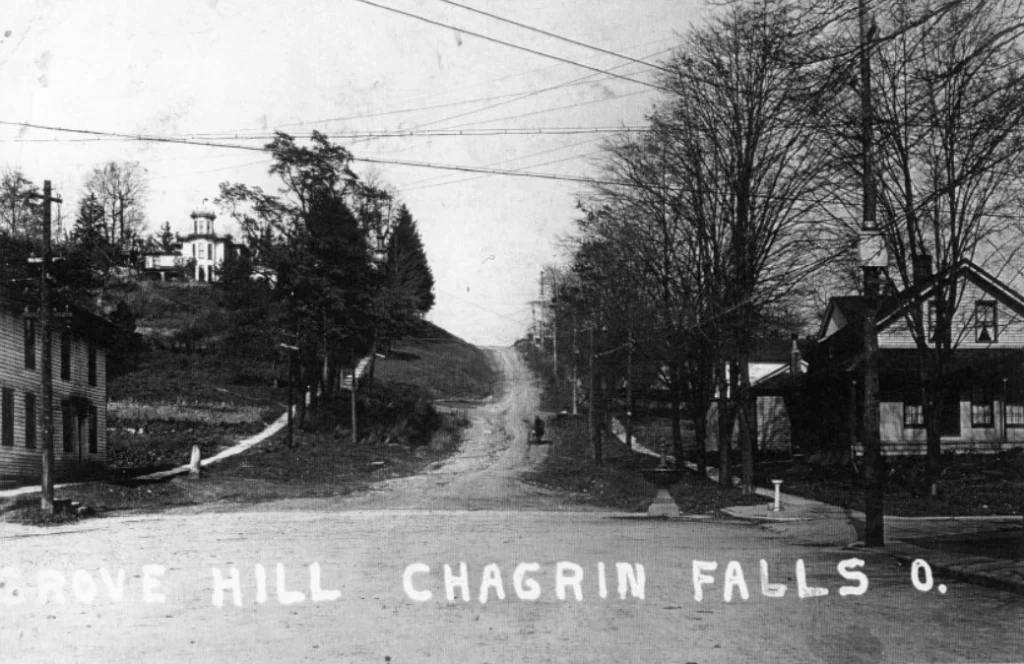
Grove Hill is one of the historic areas of Chagrin Falls, Ohio, with a history closely connected to the founding and development of the village. The hill takes its name from the grove of maple trees that once grew along its crest. Historically, Grove Hill extended from the intersection of Summit Street and Chagrin Boulevard, on the west, to North Street on the east.
Many of Chagrin Falls’ earliest settlers, business owners, and prominent residents made their homes on Grove Hill. Its elevated location offered beautiful views overlooking the village and the developing community below.
Noah Graves and the Early Settlement of Grove Hill
Noah Graves, credited as the founder of Chagrin Falls, was the first resident of Grove Hill. His home, depicted in a woodcut by Jehu Brainerd, represents an important part of the area’s early history.
Charles Sears, an early investor in the village, also built his home on the eastern portion of Grove Hill. Both the Graves and Sears homes were known for their beautiful views of Chagrin Falls.
These early residences reflect the importance of Grove Hill during the formative years of the village, as settlers and business leaders helped establish the community that would become Chagrin Falls.
Linden Hall and the Sihler Family
The Sears residence passed through the hands of several local businessmen. In 1927, the Sihler family purchased the Sears-Adams house from the Egglestons.
The property became known as Linden Hall, a name associated with the Sihler family’s work in health care. Dr. Christian Sihler, a neurologist and the first chief of staff at Lutheran Medical Center, founded Windsor Hospital in 1898. Originally located on Windsor Avenue in Cleveland, the hospital provided care for people recovering from surgery and other illnesses.
The Sihlers established a facility at Linden Hall to continue this work. Windsor Hospital closed in 1929 following the stock market crash but reopened in 1932.
From 1932 until 1986, successive members of the Sihler family operated the facility. During the 1950s, 1960s, and 1970s, it became the largest employer in Chagrin Falls.
During the 1980s, the facility increasingly focused on treating chemical dependency, including the establishment of an on-site school. Despite these efforts, the institution eventually closed permanently in 2005, bringing an important chapter in Grove Hill’s history to an end.
Grove Hill in 1859: A View of Early Chagrin Falls
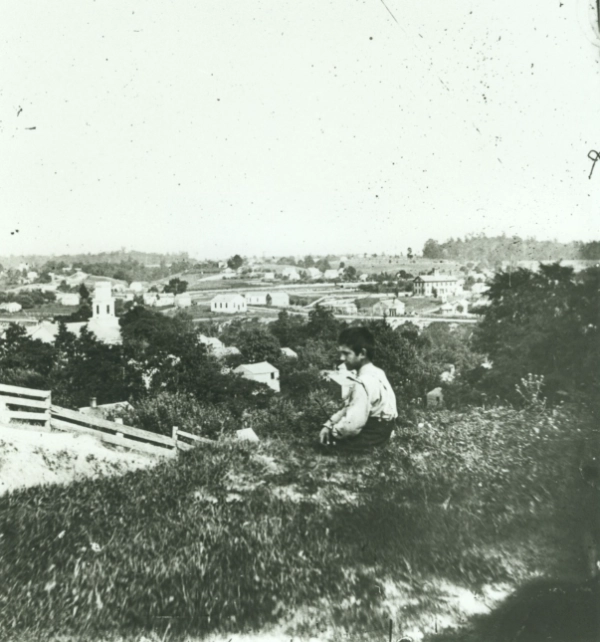
An essay written in 1859 by Westel Hunt, a tuition student at Chagrin Falls Union School, provides a valuable glimpse into the growing village as seen from Grove Hill.
Hunt described the hill overlooking the northern part of town and the impressive variety of businesses and industries operating below. His account mentioned the paper mill then under construction, foundries, machine shops, cabinetmakers, and other workshops.
He also highlighted the village’s shoe peg factory, which supplied shoe pegs to customers throughout the country. Hunt’s description illustrates the importance of manufacturing and skilled trades to the early economy of Chagrin Falls.
His essay offers a historical snapshot of a community whose industrial activity helped shape its growth and identity during the mid-19th century.
The Bancroft Greenhouses and Wyckoff Floral
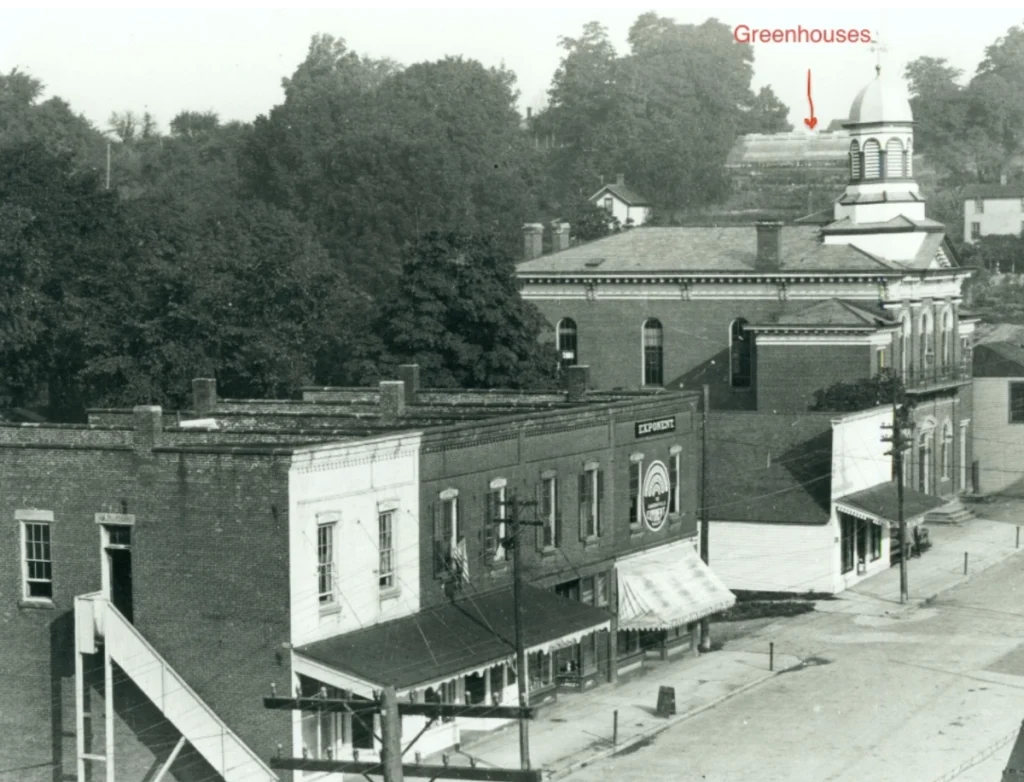
For many years, the greenhouses on Grove Hill were a prominent feature of the neighborhood.
In 1888, Mrs. Harry Bancroft established greenhouses for her floral business. According to an article published in the Chagrin Falls Exponent in November 1888, she won an award for her cut flowers at the Columbus Centennial. Another newspaper article announced a free chrysanthemum show featuring eight varieties of chrysanthemums, some described as very rare.
In the late 19th century, Westel Hunt purchased the former Noah Graves home. In 1901, he also acquired the Bancroft greenhouses for his daughter, Grace, who operated a floral business.
Grace later married Willard Wyckoff, and the business became known as Wyckoff Floral. The greenhouses and floral businesses represent another important aspect of Grove Hill’s commercial and cultural history.
W.P.A. (Works Progress Administration) improvements
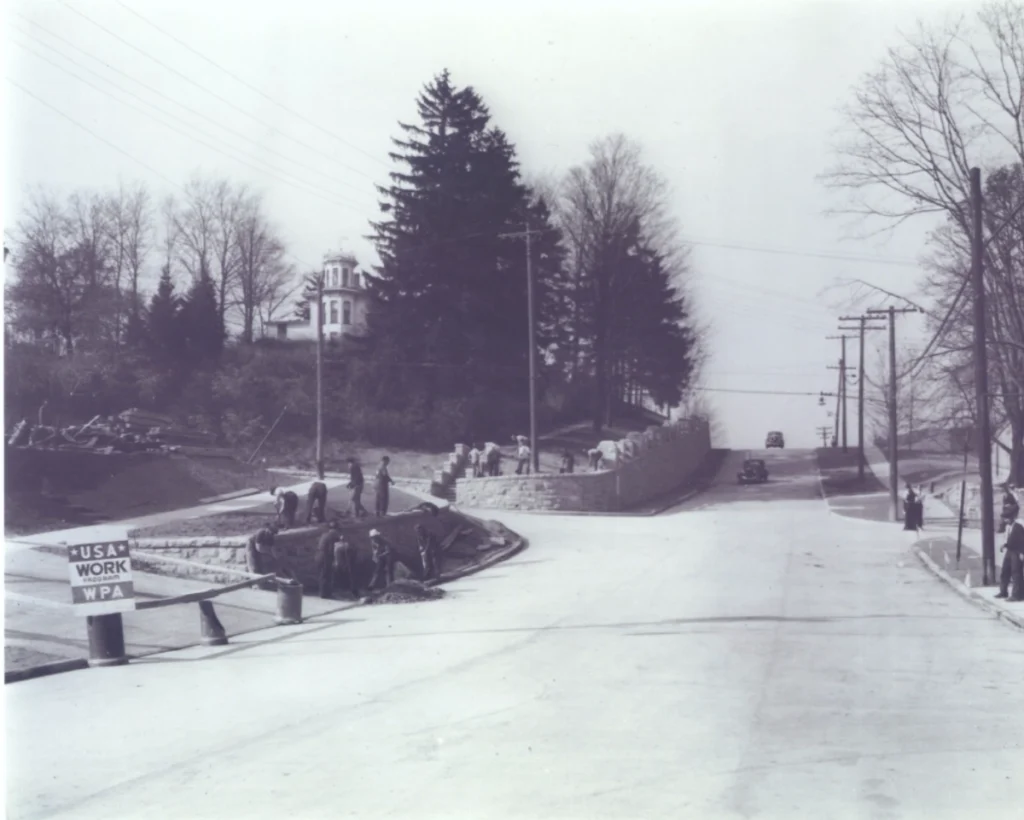
Main Street going up Grove Hill was never paved until the W.P.A. undertook the job of leveling and paving it in 1938. They used a English paving methos of pounding stones into the ground at a 45 degree angle and then adding stone over that before paving. This method has proved to need little maintenance over the years
The Chagrin Falls Pumpkin Roll
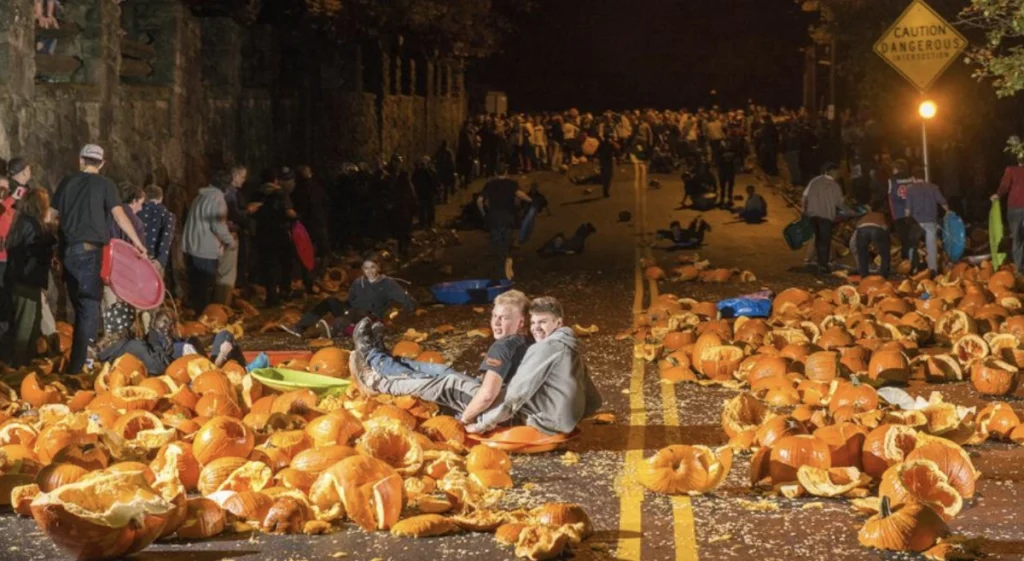
Since 1967, students of Chagrin Falls High School have continued the tradition of gathering pumpkins (legally and illegally), storing them on hidden areas and then picking a night to roll them all down the steep hill. Once they have been smashed on the hill, students use anything that can act as a sled and slide down the hill.
Grove Hill’s Lasting Place in Chagrin Falls History
From the homes of early settlers such as Noah Graves and Charles Sears to the Sihler family’s Linden Hall and the Bancroft greenhouses, Grove Hill reflects the evolution of Chagrin Falls from an early settlement into an established village.
Its history encompasses prominent residents, local industry, health care, and horticulture. Today, the story of Grove Hill remains an important part of understanding the people, properties, and businesses that helped shape historic Chagrin Falls, Ohio.