


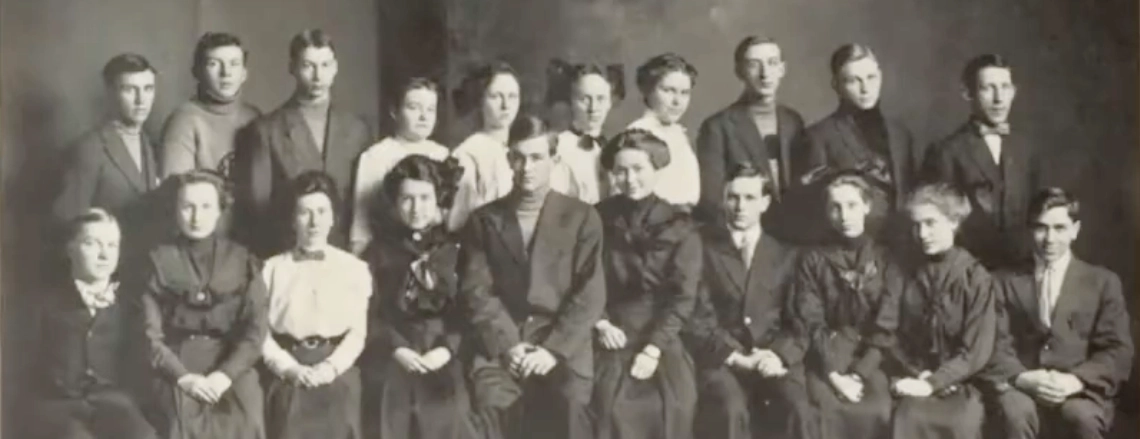

The Williams Family Arrival in Chagrin Falls
The Williams family was among the most influential industrial and civic families in the early history of Chagrin Falls, Ohio. Reverend Benajah Williams, his wife Jerusha Smith Williams, and their sons arrived in the village from New York in 1840.
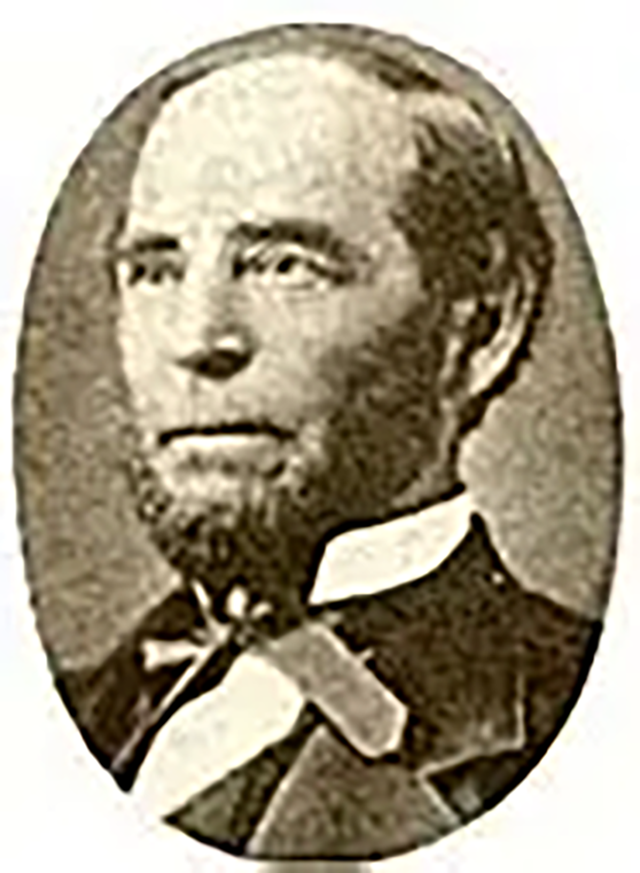
One of their sons, L.D. Williams, had settled in Chagrin Falls three years earlier, in 1837. L.D. Williams played an important role in the developing community as a teacher, preacher, and the first postmaster of Chagrin Falls.
Upon arriving, Reverend Williams purchased property at the western end of Pearl Street, now West Washington Street, from Samuel Nettleton. The site included a sawmill, furnace, and tin shop. Despite his efforts, Reverend Williams struggled to establish a successful business there and eventually sold the property to his son, John Wesley Williams, in 1844.
Early Life of John Wesley Williams
John Wesley Williams was born on July 12, 1815, in Cazenovia, Madison County, New York. He married Fanny Tenny in Parma, New York, on July 20, 1834.
The couple’s son, Adam Clark Williams, was born in Chagrin Falls on January 22, 1848. Adam would later become a key figure in the family business and help expand the Williams manufacturing operations.
Building a Manufacturing Empire in Chagrin Falls
After acquiring the former mill property in 1844, John Wesley Williams began developing what would become one of the most successful manufacturing businesses in Chagrin Falls.
Using the existing furnace building, he added a small one-ton cupola furnace and employed a molder along with a few assistants. The foundry initially produced chain pump reels, pump spouts, and plow points for local farmers and businesses.
Like many early entrepreneurs in northeastern Ohio, Williams often operated in a barter economy. When a wagonload of products was completed, he traveled throughout the countryside exchanging his manufactured goods for scrap iron and farm produce. Some of the produce was used to pay employees, while the remainder was traded with local merchants to help meet payroll obligations.
The Success of the J.W. Williams Foundry
As the business expanded, Williams introduced the popular “Empire” wood-burning stove. The company later diversified into the production of wagon boxes, wheel hubs, axle boxes, and polished flat irons.
Despite limited access to cash and financing, the foundry continued to grow. A larger cupola furnace was installed, and a trip hammer was added to forge wrought-iron axles.
During the Civil War, the company secured a government contract to manufacture cannon carriages. The foundry also supplied castings used in machinery for the rapidly expanding Pennsylvania oil fields.
One of Williams’ most significant achievements was obtaining permission to manufacture seamless wagon skeins. Wagon skeins and bolster plates soon became the company’s principal products and established the foundry as an important regional manufacturer.
Adam Clark Williams Joins the Family Business
In 1865, John Williams’ son, Adam Clark Williams, began working full-time in the foundry. His involvement marked the beginning of the second generation of Williams family leadership.
By 1872, Adam became a partner in the business, and the company was renamed J.W. Williams & Son. Under their joint leadership, the firm continued to expand and modernize.
During the 1870s, the company added a line of pruning tools to its product offerings. The foundry also adapted to changing technology by replacing wood and charcoal with coke as fuel for melting iron. Coke was transported by wagon from Bedford, Ohio, while pig iron was hauled from Solon, Ohio.
Civic Leadership and Public Service
In addition to his business accomplishments, John Wesley Williams played a major role in the civic development of Chagrin Falls.
He served as Village Marshal and was elected Mayor of Chagrin Falls in 1853, 1861, and 1868. Throughout his life, he actively supported projects designed to improve the village’s economy and transportation connections.
Williams was particularly instrumental in the development of rail transportation. He helped promote and support the construction of the Chagrin Falls & Southern Railroad, which provided the village with vital connections to regional markets and transportation networks.
Following the railroad’s completion in 1877, Williams served as its superintendent, helping oversee its successful operation.
Death and Legacy of John Wesley Williams
John Wesley Williams died in 1886 after forty-two years in business in Chagrin Falls. At the time of his death, he was recognized as the village’s longest-serving businessman, with only a handful of residents having lived in the community longer.
His influence extended far beyond his foundry. Through manufacturing, transportation development, public service, and job creation, Williams helped transform Chagrin Falls from a frontier settlement into a thriving industrial village.
Contemporaries credited him with doing more than almost any other individual to promote the material growth and prosperity of Chagrin Falls. His business provided employment for generations of workers, while his leadership in railroad development connected the village to broader markets and opportunities.
Today, John Wesley Williams is remembered as one of the most important industrial pioneers in Chagrin Falls history, whose entrepreneurial vision helped shape the economic foundation of the community for decades to come.