



Inventor of Pep-O-Mint Life Savers
Early Life and Family
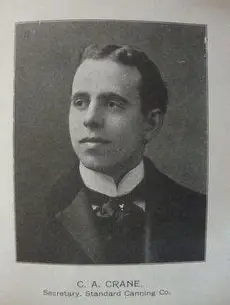
Clarence Arthur Crane was born in Garrettsville on April 5th, 1875, where his father worked as a producer of maple sugar. On June 1, 1898, Crane married Grace Edna Hart Crane after a brief two-month courtship. The following summer, the couple welcomed their only child, poet Hart Crane.
Although Crane achieved considerable success in business, his personal life was often difficult. Grace Crane struggled with mental illness, and the couple separated several times before officially divorcing on April 7, 1917.
Business Career and Maple Sugar Success
Crane began his career working in his father’s maple sugar business. In 1903, he established his own maple sugar company in Warren. The company quickly grew into the world’s largest producer of maple sugar.
In 1909, Crane sold the business but remained with the company as a salesman in Cleveland for the next two years. His entrepreneurial spirit soon led him into the confectionery industry.
The Creation of Life Savers
In 1911, Crane founded the Queen Victoria Chocolate Company in Cleveland. While operating the business, he recognized a major challenge facing candy makers: chocolate melted easily during the summer months, reducing sales.
Seeking a solution, Crane developed a new type of candy in 1912 using machinery typically employed by pharmacists to produce round, flat pills. He punched a hole in the center of the candy, giving it the appearance of a life preserver, and named it “Life Savers.” The original flavor was peppermint, marketed as “Pep-O-Mint Life Savers.”
Crane promoted the candy as a breath mint with the slogan “For That Stormy Breath.” The candy was originally packaged in cardboard tubes featuring an illustration of a sailor tossing a life preserver to a young woman.
Sale of Life Savers and National Success
In 1913, New York advertising executive Edward John Noble approached Crane with a new marketing campaign for Life Savers. Although Crane rejected the proposal, he agreed to sell the rights to the candy for $2,900.
Under Noble’s ownership, Life Savers underwent several important changes. The candy was repackaged in foil tubes to preserve freshness and heavily marketed to saloon owners, who encouraged patrons to use the mints after drinking and smoking. The strategy proved enormously successful, and Life Savers quickly became a national sensation, earning Noble millions of dollars from his investment.
Later Business Ventures
Despite selling Life Savers, Crane remained active in the candy industry. In 1916, he established the Crane Chocolate Company. Although headquartered in Cleveland, the company expanded rapidly, opening sales offices in New York City and Kansas City by 1921.
Crane’s Canary Cottage
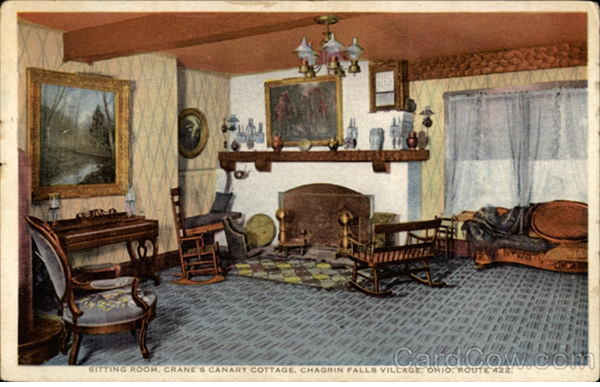
In 1927, Crane purchased two cottages in Chagrin Falls. After investing $10,000 into the property, he connected the buildings with a two-story, 10,000-square-foot addition. He painted the combined buildings a bright yellow and added gardens and fountains and opened business as a restaurant called ‘Crane’s Canary Cottage’. The restaurant served local meat and produce. In 1930, Crane married Bessie Meachem, the restaurant hostess. The cottage served as the out-of-city home for the Cranes, who stayed in private rooms upstairs. The employees lived in the north end of the building without heat or insulation, but holes cut in the floor provided warmth from the kitchen below. With impressive fireplaces, good food and a sophisticated atmosphere, the restaurant gained a national reputation. Will Rogers and Duncan Hines ate there, Charles Lindbergh had a reception and stayed in one of the guest rooms, and John D. Rockefeller had his own table