


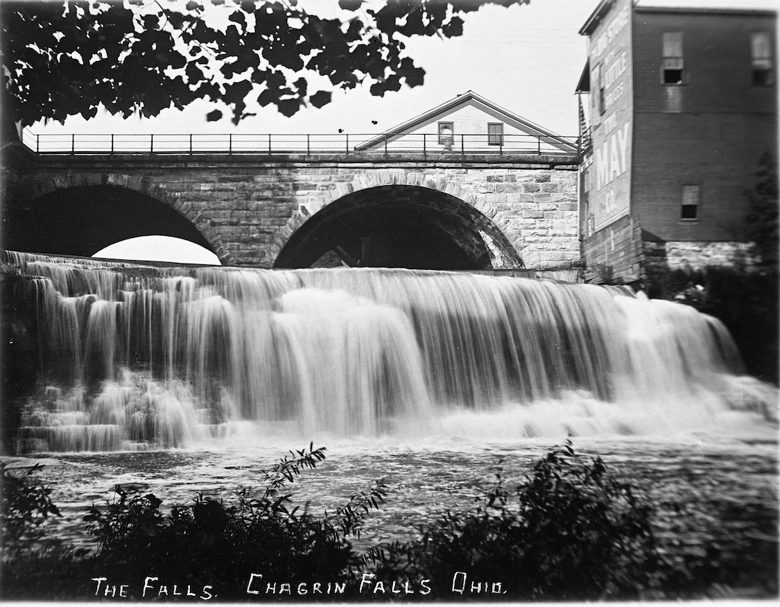

The Cuyahoga County Fair Comes to Chagrin Falls
The history of the Cuyahoga County Fair in Chagrin Falls, Ohio, dates to the early 1870s, when the Cuyahoga County Fair Association began considering a new location for its annual agricultural exhibition. The organization had sponsored the first Cuyahoga County Fair in 1847 on grounds south of Cleveland in Newburgh, Ohio.
By the early 1870s, several directors of the Cuyahoga County Fair Association were residents of Chagrin Falls, including John W. Williams, I. W. Pope, W. T. Uphill, Alexander Frazer, H. H. Kelley, and Washington Gates. In 1872, the association’s directors met to discuss the future of the fair and the possibility of relocating to a larger or more suitable site. During those discussions, Chagrin Falls resident I. W. Pope encouraged the directors to consider moving the fair to Chagrin Falls.
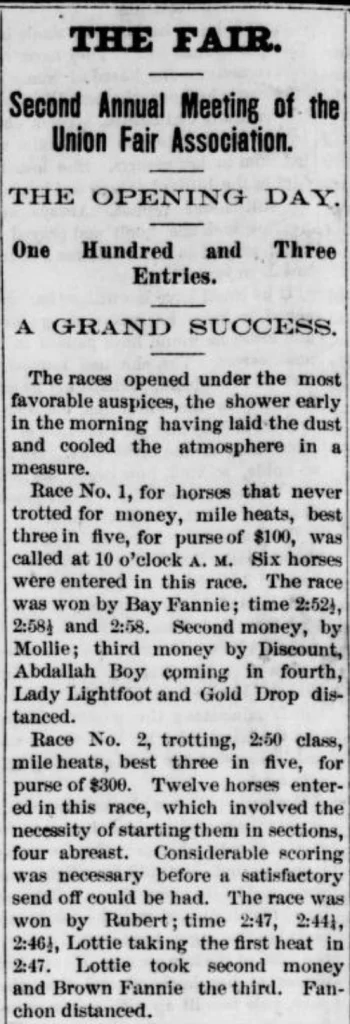
The Union Fair Association and the Chagrin Falls Fairgrounds
In January 1873, the Cuyahoga County Fair Association entered into a lease agreement with the newly organized Union Fair Association of Chagrin Falls for the use of what would become known as the Chagrin Falls Fairgrounds on East Washington Street.
The founders of the Union Fair Association included several prominent Chagrin Falls residents:
- I. W. Pope
- H. S. Osmond
- Frank Brown
- H. H. Benjamin
- William Hutchings
- Jefferson Fisher
- Alfred Williams
- Dr. H. W. Curtiss
- Joseph Stoneman
In May 1873, the Union Fair Association purchased 28 acres of land on East Washington Street from Harvey Bassett for $2,575. The property is significant in Chagrin Falls history because the former fairgrounds are now the site of the Chagrin Falls Middle School and High School campuses.
The association also acquired the right to quarry stone on the property and to construct a culvert to harness the springs that ran through the land. This provided a dependable supply of water for livestock during the fair season.
Building the Chagrin Falls Fairgrounds
After acquiring the property, the Union Fair Association developed the site into a substantial agricultural and horse-racing facility. The grounds included a half-mile racing track, grandstand, horse stables, fencing, and an exhibit hall.
The facilities were put to extensive use for the first time in May 1874, when the association held its first racing meet at the Chagrin Falls Fairgrounds.
The first race featured a $5 entry fee and approximately $4,000 in prize money, a considerable amount for the period. Racing meets became a regular feature of the Fairgrounds during the months leading up to the annual county fair.
Although the racing cards were often well filled, attendance was disappointing. The Union Fair Association soon experienced serious financial difficulties.
Financial Difficulties and the Union Fair Association Bankruptcy
To help keep the Fairgrounds operating, the Cuyahoga County Fair Association provided loans to the Union Fair Association to assist with maintaining the barns and grandstands.The financial assistance was not enough to save the organization. In 1877, the Union Fair Association was forced to file for bankruptcy. Despite the organization’s failure, horse racing and agricultural events continued to play an important role in the history of the Chagrin Falls Fairgrounds.
Horse Racing Continues in Chagrin Falls
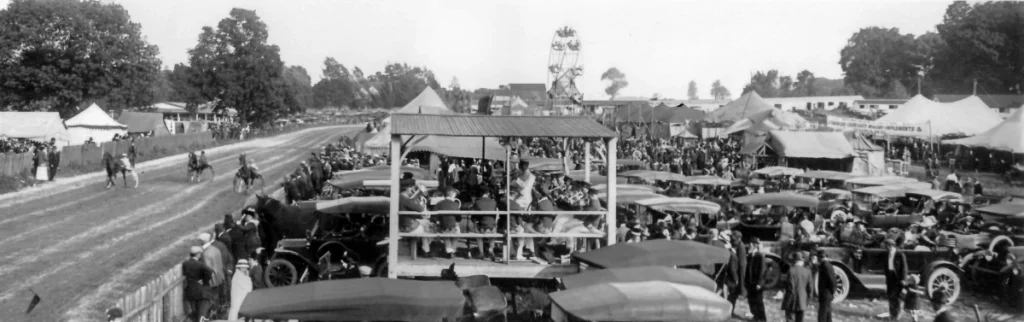
The end of the Union Fair Association did not mean the end of horse racing in Chagrin Falls. When the County Fair was not held in 1879, local directors organized the Union Agricultural Society to ensure that racing would continue at the Fairgrounds.
In 1892, the Horsemen’s Club was organized to hold matinee races at the grounds. The following year, in 1893, the Chagrin Falls Driving Club continued organizing race meets. These events continued into the early twentieth century and helped establish the Fairgrounds as an important center for horse racing and community entertainment.
The “East Cuyahoga County Fair”
The Chagrin Falls event was commonly known as the “East Cuyahoga County Fair” because multiple county fairs were held in Cuyahoga County—one serving the eastern portion of the county and another serving the western portion. The fair remained in Chagrin Falls until 1925, when the Cuyahoga County Commissioners decided to move the event west to Berea, Ohio. For nearly 50 years, it served as an important showcase for the region’s agricultural products, livestock, and manufactured goods. Local manufacturers used the fair as an opportunity to display their products, while farmers exhibited livestock and agricultural produce. The County Fair was held at the end of the growing season, typically sometime between mid-August and early or mid-October.
Entertainment at the Fairgrounds
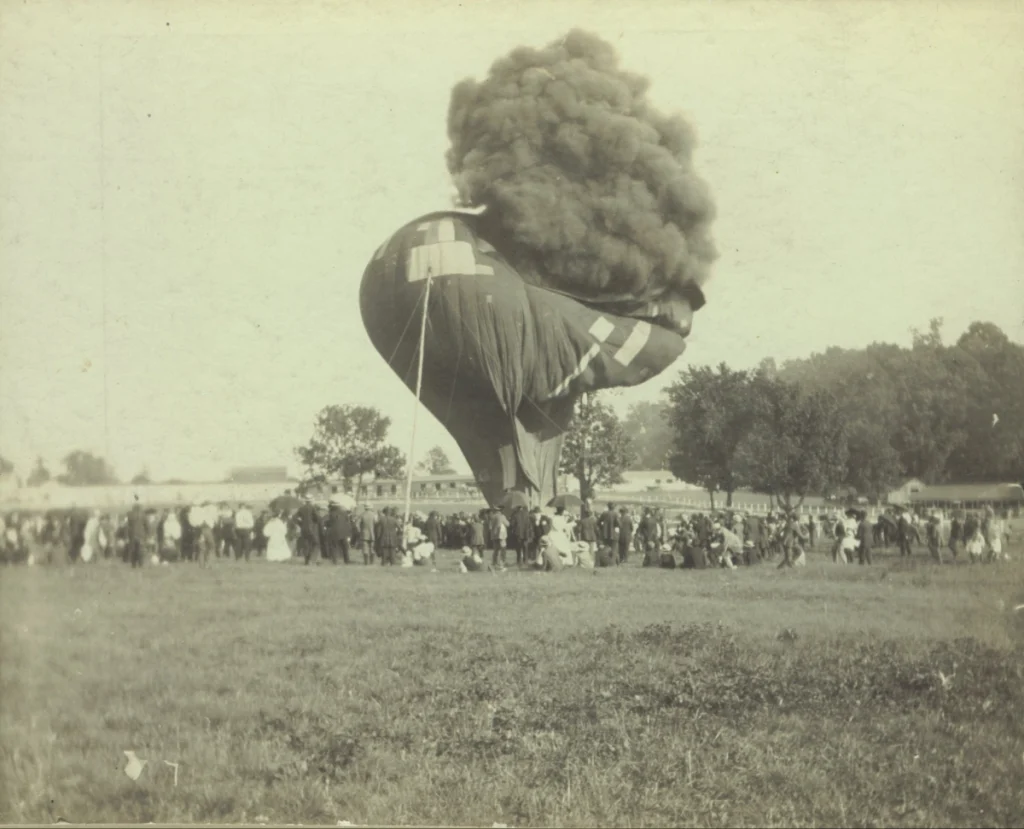
The East Cuyahoga County Fair offered far more than agricultural exhibits and livestock competitions. The Fairgrounds became a major source of entertainment for residents of Chagrin Falls and surrounding communities. A giant Ferris wheel was located in the midway, while visitors could also enjoy live bands, vendors, performers, and other attractions. At the 1915 County Fair, Professor Oscar Hunt and his wife, Elizabeth, performed daring aerial stunts, including parachute jumps from balloons and trapeze acts. Visitors could even purchase a ticket for the opportunity to ride in their balloon.
Other attractions included demonstrations of a “flying machine” twice each day and displays featuring fast automobiles, reflecting the public’s growing fascination with aviation and the automobile during the early twentieth century.
Racing and Other Competitions
Racing was an important part of the Fairgrounds’ history from its earliest days. At the first fair, a $10 purse was offered to the winner of a footrace around the track. The race was won by Tom Bright of Chagrin Falls, who completed the course in two minutes and 38 seconds. Horse racing, footraces, automobile demonstrations, and other competitions made the Fairgrounds a popular gathering place for both local residents and visitors.
Affordable Admission to the 1916 County Fair
The Chagrin Falls County Fair was also an affordable form of entertainment for families. In 1916, an adult admission ticket cost only 25 cents, while admission for children was 10 cents. Visitors arriving by automobile could park inside the track for 50 cents. A special “Membership Ticket” cost $1 and provided the purchaser with four admission tickets to the fair. These prices made it possible for families throughout the region to attend the annual event and experience the agricultural exhibits, racing, midway attractions, entertainment, and demonstrations.
The Historic Fairgrounds Grandstands
The original Fairgrounds featured wooden grandstands where spectators could watch races and other events. In 1913, the wooden structures were replaced by two concrete grandstands. Those concrete grandstands have survived and remain an important physical reminder of the Fairgrounds’ history. Today, they serve as the home grandstands at Chagrin Falls High School’s C. S. Harris Field.
The Former Fairgrounds Today
The land that once served as the Chagrin Falls Fairgrounds is now home to the Chagrin Falls Middle School and High School campuses. Although the annual county fair eventually moved to Berea in 1925, important physical remnants of the Fairgrounds remain. The surviving concrete grandstands provide a tangible connection to the period when thousands of visitors came to Chagrin Falls for agricultural exhibitions, horse racing, entertainment, and community celebrations.
For nearly half a century, the Cuyahoga County Fair and Chagrin Falls Fairgrounds played an important role in the community’s economic, agricultural, and social life. The Fairgrounds helped introduce Chagrin Falls to visitors from throughout the region and contributed to the village’s growing regional prominence. Today, the former Fairgrounds remain an important part of Chagrin Falls history, connecting the community’s present-day schools and athletic fields with a remarkable chapter in the village’s nineteenth- and early twentieth-century past.