


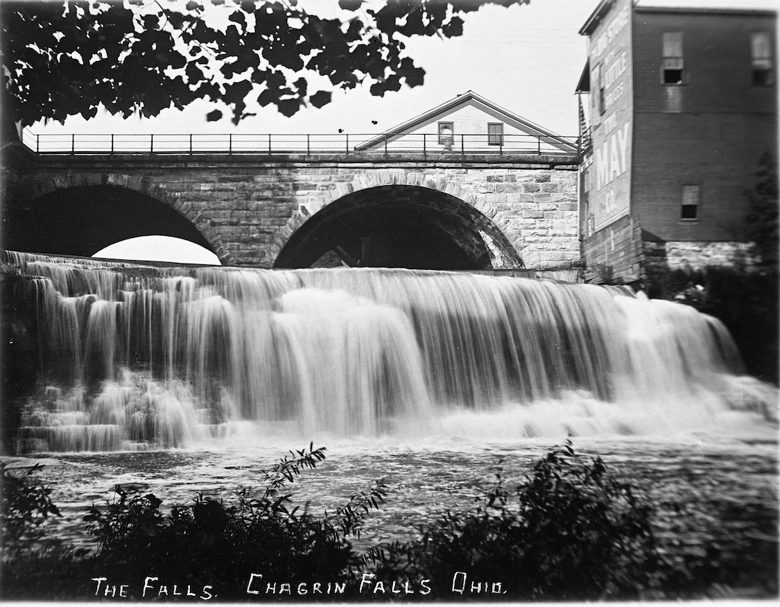

The History of Henry Church Jr. Rock (formerly known as Squaw Rock) in Bentleyville, Ohio
Discovering the Sculpture Along the Chagrin River
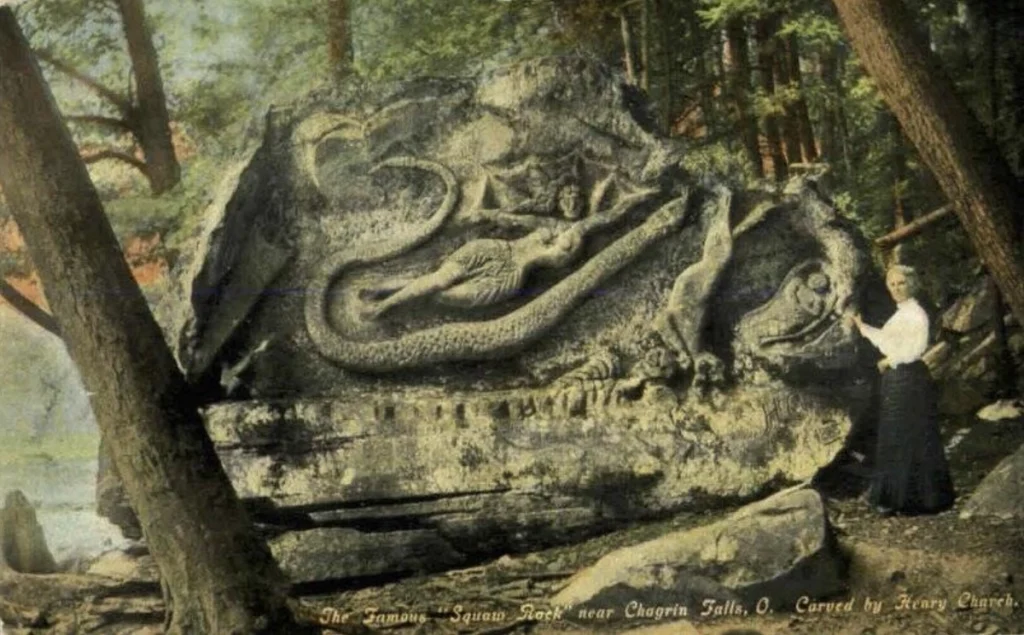
Henry Church Jr. Rock (Squaw Rock), a remarkable work of rock sculpture created by Henry Church Jr., is located along the Aurora Branch of the Chagrin River in Bentleyville, Ohio. Carved directly into the face of a large rock, this unusual piece of folk art features an array of figures, symbols, and historical images that reflect Church’s artistic vision and spiritual beliefs.
The story behind Henry Church Jr. Rock reveals the determination of a self-taught artist who hoped to create a mysterious work of art that would inspire wonder in those who discovered it.
Henry Church Jr. and his Inspiration
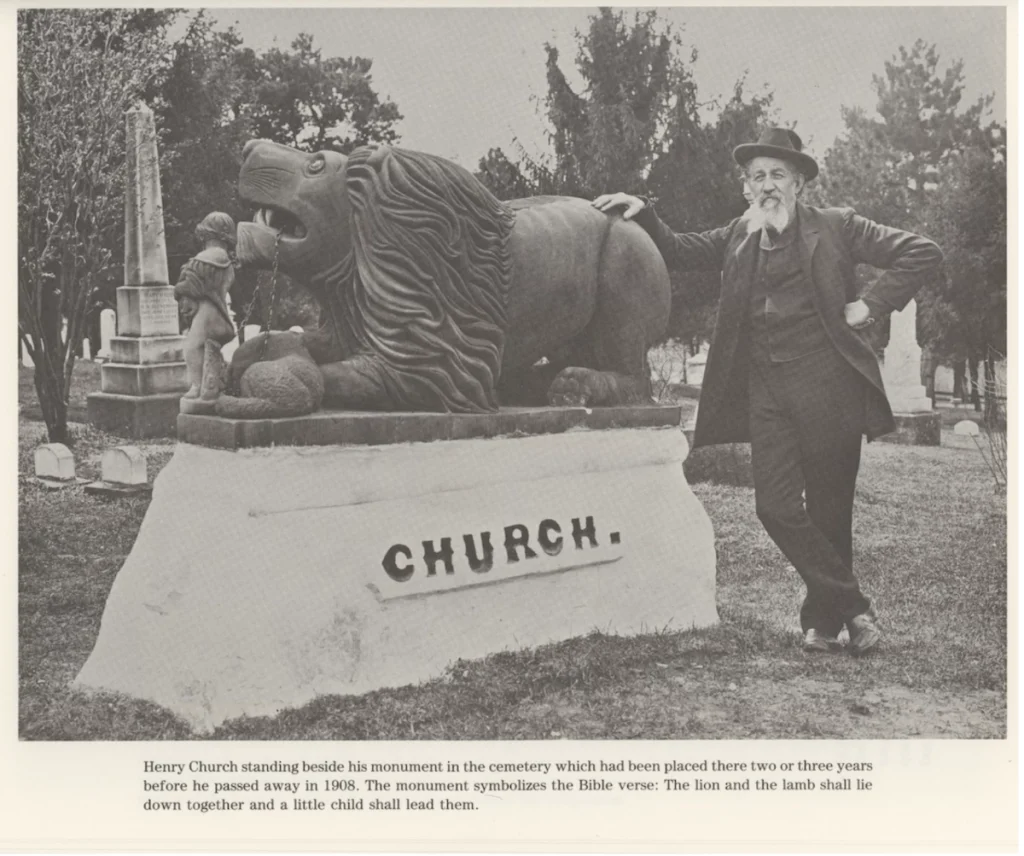
In July 1891, Henry Church Jr. was interviewed by a writer for the Cleveland Plain Dealer known only as Stonehouse. The resulting feature article, titled A Genius Near Home—A Sketch of the Most Remarkable Man in Northern Ohio, provided insight into Church’s inspiration for creating his work of art.
Church recalled that, as a young boy traveling along the river with his father, he had seen a wigwam and a Native American woman. The experience made a lasting impression on him. He resolved that someday he would return to the area and create something that would tell the story of Native Americans.
Years later, Church began turning that childhood ambition into reality.
A Secret Sculpture Inspired by Spiritualism
Church was a Spiritualist, and his approach to creating Squaw Rock was unusual. He intended to complete the monumental sculpture without anyone knowing who was responsible for it.
His dream was that people would stumble upon the finished carving, marvel at what they saw, and wonder who could have created such an extraordinary work. He wanted the sculpture to remain an anonymous artistic achievement that would spark curiosity and amazement.
The north-facing side of Squaw Rock incorporates symbols associated with both Spiritualism and Native American imagery, reflecting the ideas and influences that shaped Church’s vision.
The Intricate Carvings on the North Face of Squaw Rock
The north face of Squaw Rock contains numerous figures carved in deep relief, including a snake, a maiden, and a panther. Across much of the rock face, these carvings extend approximately 14 to 16 inches into the stone.
Creating such detailed images required Church to remove a substantial amount of rock. The scale and depth of the carvings suggest that he devoted considerable time and effort to the project before anyone discovered his work.
The detailed figures make the north face a particularly striking part of this historic sculpture.
Historical Images on the East Face
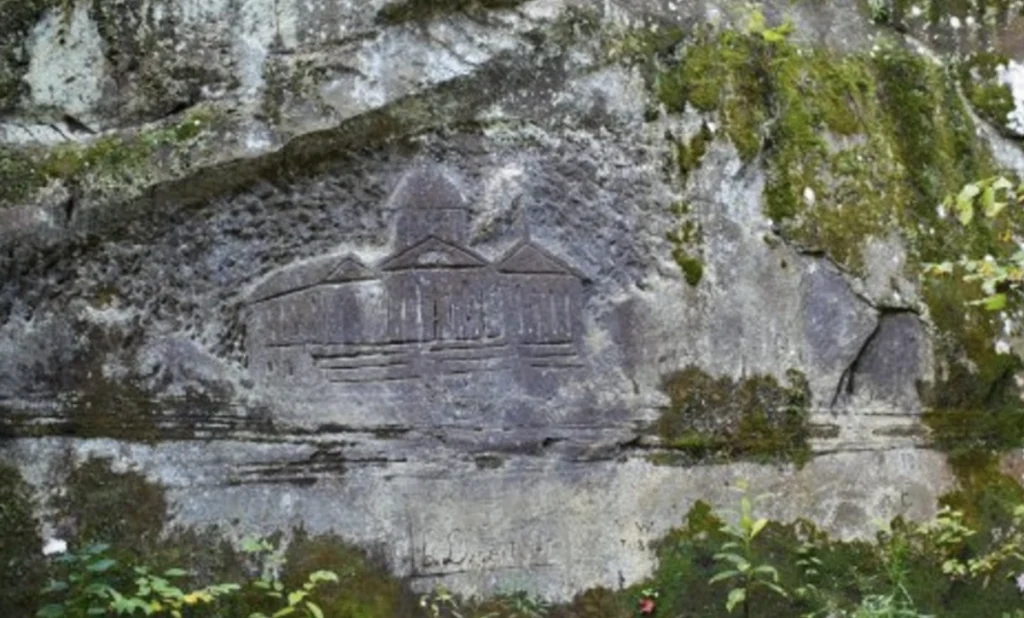
The east-facing surface of Squaw Rock features a different collection of carvings, illustrating elements of American history and national development.
Among the images are:
- A Viking ship
- The Mayflower
- A woodsman holding an ax
- A log cabin
- The United States Capitol building in Washington, D.C.
Although the carvings on the east face are not as deeply cut as those on the north side, they are still substantial. Together, the two faces present a varied collection of images that reflect Church’s broad artistic interests and his interpretation of history.
The Discovery That Ended Church’s Secrecy
Church worked on Squaw Rock after finishing his regular workday. He would travel to the relatively remote location along the Chagrin River and continue carving for as long as daylight allowed before making his way home.
Eventually, a group of fishermen discovered him at work. Church asked them to keep his activities a secret, but word soon spread.
People began visiting the site to watch him carve, destroying the anonymity he had hoped to preserve. The attention greatly displeased Church, whose original vision depended on people discovering the completed sculpture without knowing its creator.
For a time, he stopped working on the rock. In his mind, the loss of secrecy had taken away much of the wonder he had hoped the finished work would inspire.
The Completion and Signature of Squaw Rock
Despite his disappointment, Church eventually returned to the sculpture and decided to finish the portion on which he had been working. He signed the work “H. Church, 1885.”
The signature provides a lasting connection between the artist and the remarkable carving he created along the Chagrin River.
Although Church had hoped to remain anonymous, his work became a lasting testament to his creativity, persistence, and desire to create something extraordinary.
Squaw Rock: A Unique Part of Bentleyville’s History
Henry Church Jr. could not have known that his vision would ultimately be fulfilled in a different way than he had imagined. Although his identity as the artist became known, Squaw Rock continued to inspire the curiosity and wonder that had motivated its creation.
Today, the sculpture stands as a distinctive part of the historical and artistic heritage of Bentleyville, Ohio. Its intricate carvings, unusual imagery, and compelling origin story offer a glimpse into the mind of an artist who devoted countless hours to transforming a natural rock formation into an extraordinary work of art.
Squaw Rock remains a fascinating chapter in the history of the Chagrin River area and a reminder that remarkable works of art can be found in unexpected places.