


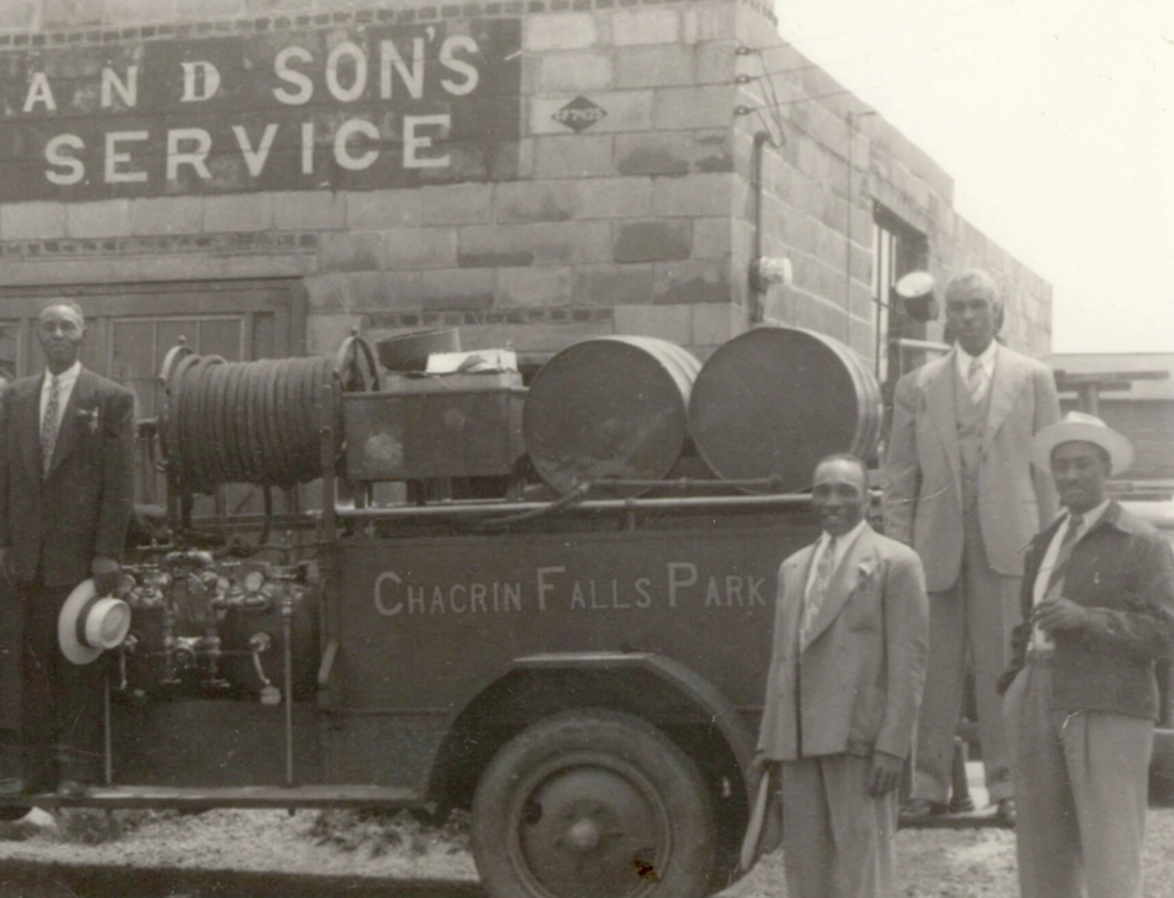

Chagrin Falls Park is a neighborhood in Bainbridge Township, just beyond the eastern border of the Village of Chagrin Falls. For much of its history, the neighborhood was predominantly Black. Today, it is a more racially diverse community.
The story of Chagrin Falls Park is part of the larger history of Chagrin Falls and the surrounding communities—a history shaped by geography, changing boundaries, industry, settlement, property ownership, economic circumstances, and the social conditions of the times.
Race, Class & Opportunity
Bainbridge and Chagrin Falls, like communities throughout our nation, have a history that includes both achievement and injustice. During the 1920s and 1930s, racial discrimination was widespread, and laws and public institutions often permitted or enforced it.
Race and economic circumstances—often intertwined—created barriers that could affect individuals and families in different ways, including where they lived, the opportunities available to them, and their ability to own property and build wealth.
Resistance to racial equality and social change was widespread, and Chagrin Falls was no exception. During this period, there was an active Ku Klux Klan presence in the community.
These are important parts of the historical record and of the history of our communities and our country. Although great strides have been made, the effects of that history continue to be felt today.
More to the Story
The development of Chagrin Falls Park took place within a much larger story. Its origins cannot be understood through race alone, but must also be considered in the context of geography, changing political boundaries, industry, property ownership, economic circumstances, and the development of surrounding communities.
To understand how Chagrin Falls Park came to be, it is helpful to begin with the geography and political boundaries of the area in the 19th century.
The County Line
In 1840, the boundary between Cuyahoga and Geauga counties ran directly through the center of the town of Chagrin Falls.
At the time, Chagrin Falls was growing rapidly as mills and other industries developed along the river. The Village’s location in two different counties created practical complications for businesses, property owners, and local government.
The location of the county line—and the changes that followed—would become an important part of the story of how Chagrin Falls and the surrounding neighborhoods developed.
The 1841 Land Exchange
In 1841, Cuyahoga and Geauga counties exchanged land in an effort to resolve the county boundary that divided the growing village of Chagrin Falls.
Under the agreement, Cuyahoga County transferred approximately 900 acres in Russell Township to Geauga County. In exchange, Geauga County transferred approximately 900 acres in Orange Township to Cuyahoga County.
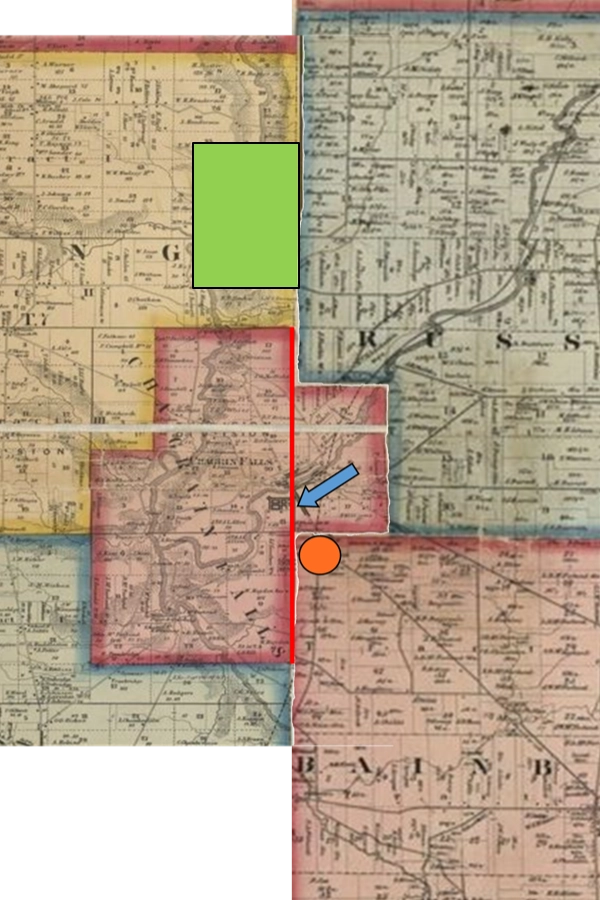
Reading the Map
Area maps prepared by the Chagrin History Center, based on Cuyahoga County in 1858 and Geauga County in 1857.
The red line shows the approximate county boundary before the 1841 exchange. At that time, the village of Chagrin Falls was divided between Cuyahoga and Geauga counties.
The green area indicates the approximate location of the land transferred between the counties. Geauga County subsequently returned the land it had received from Cuyahoga County, reportedly because the property was not considered desirable. The land transferred by Geauga County to Cuyahoga County, however, was retained. This effectively brought the village of Chagrin Falls together within a single county.
The blue arrow identifies Triangle Park.
The orange circle marks the approximate location of the area that would later become known as Chagrin Falls Park, established in 1921.
We have not located a map showing the precise boundaries of the land exchanged in 1841. Because the exchange and subsequent return of the land occurred relatively quickly, the exact location and boundaries of the parcels can be difficult to establish from surviving maps.
From Land Allotment to Neighborhood
The land that would eventually become Chagrin Falls Park has a much longer history than the neighborhood itself. This area was not part of the land transferred between Cuyahoga and Geauga counties in the 1841 exchange and it was not developed as a neighborhood until roughly 80 years later. It would be nearly 90 years before the area became home to a significant African American population.
Historical maps of Chagrin Falls frequently identify parcels of land as allotments, such as the Graves Allotment and the Hutchings Allotment. In this historical context, an allotment generally refers to a tract of land that had been divided, owned, sold, or otherwise designated for individual use. These names often reflected the early property owners or settlers associated with the land.
The area that later became Chagrin Falls Park was therefore part of the community’s evolving land and property history long before it became a residential neighborhood.
Before the Park
In 1909, R. G. Gardner inherited approximately 156 acres from his father—the land that would eventually become Chagrin Falls Park. Gardner farmed the property for the next 11 years.
In the winter of 1920, Gardner sold the 156 acres to Benjamin Kauffman, who worked with the Home Guardian Corporation. Home Guardian surveyed the property, laid out and graded streets, and divided the land into 1,386 lots, each measuring 20 by 100 feet. The company named the new development Chagrin Falls Park.
Why Is It Called Chagrin Falls Park?
The answer begins with the development of the property in 1920–1921. Home Guardian Corporation of New York purchased Gardner’s land and named the proposed development Chagrin Falls Park.
The historical record does not tell us exactly why Home Guardian chose the name. One possibility is that Chagrin Falls was the nearest well-known village and a growing commercial center in the area. Using the name of a nearby, recognizable community was not unusual when naming developments located outside municipal boundaries.
Whatever the reason, the name remained, and the development eventually became the neighborhood we know today as Chagrin Falls Park.
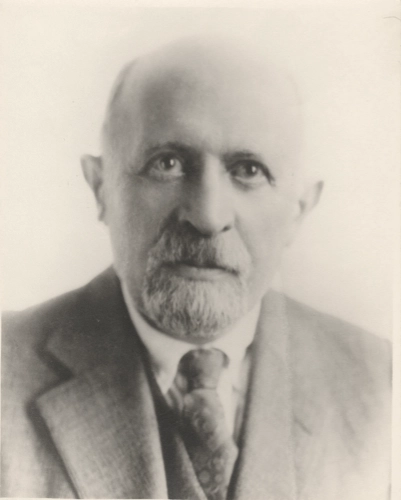
Image source link.
An Ambitious Beginning
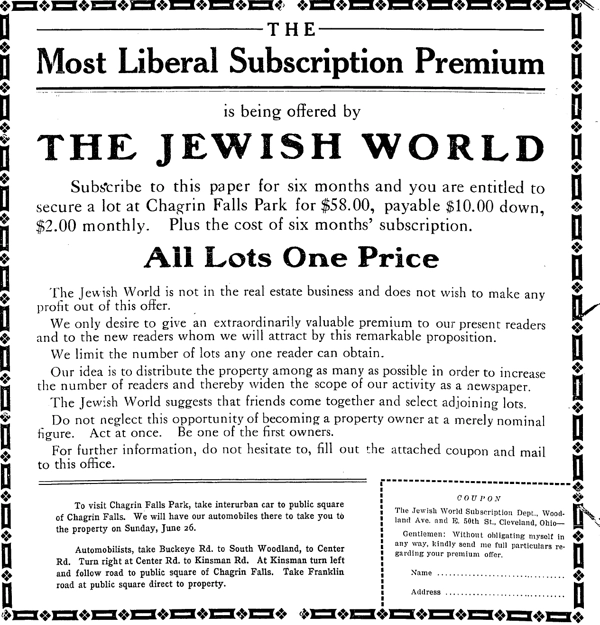
In the spring of 1921, Home Guardian Corporation worked with Samuel Rocker, editor of the Jewish World, a Yiddish-language newspaper serving Cleveland’s Jewish community. Rocker hoped the new development would attract Jewish families from Cleveland who wanted to build summer homes outside the city.
Home Guardian and Rocker began offering lots in Chagrin Falls Park as subscription premiums through the newspaper. One advertisement offered a six-month subscription to the Jewish World along with a deed for a lot in the new development.
The effort met with little success. According to historian Mary Hitchcock, some Chagrin Falls residents learned about the development and responded by burning a cross on the property—a threatening act intended to discourage Jewish families from settling there.
After approximately three years of unsuccessful sales, the remaining lots were sold in 1924 to Grover and Florence Brow. Historian John Wiese notes that the Brows were white.
The Park Develops
In 1924, Home Guardian sold the allotments to Alnola Co., represented in Ohio by Grover W. Brow. Brow subsequently marketed the lots to Black residents of Cleveland’s East Side.
Oral histories collected from longtime Park residents provide additional insight into this period. One former resident accused Brow of failing to pay taxes on the properties and described his dealings as unfair. The same account noted that Brow sold lots to both Black and white buyers. Historical records indicate that more than 250 individuals purchased lots during this period.
The development of the Park also coincided with changes in the local workforce. In 1920, the Henry Furnace Company, located near the edge of the Village of Chagrin Falls, recruited Black workers from the South. Among those workers were Albert Bolden and James Phillips. Before 1924, both the Bolden and Phillips families had moved into homes in Chagrin Falls Park.
The early Park was therefore not exclusively Black. White and Black families lived in the community during its early development. Over time, the population became predominantly Black, shaped by the availability of housing, employment patterns, migration, and the broader social conditions of the period.
Community Life
Life in the Park in the 1930s
Life in Chagrin Falls Park during the 1930s was largely rural. Many homes did not have running water or electricity, and the roads could become muddy and difficult to travel after rain. Residents tended gardens and kept farm animals, living with few of the modern conveniences available elsewhere.
Many residents worked outside the Park. Cleveland was an important employment center, particularly for factory workers, while others worked for the City of Cleveland, drove trucks, or found employment in communities throughout the Chagrin Valley.
Transportation could be challenging. Men working in Cleveland sometimes carpooled, traveled by streetcar or bus, or stayed in Cleveland during the workweek and returned home on weekends.
Discrimination was part of everyday life in the region during this period. Park residents interviewed during Andrew Wiese’s research recalled instances in which Chagrin Falls merchants refused to serve Black customers. At the same time, their recollections also describe relationships with white residents and merchants who welcomed and served them.
Residents of the Park developed their own churches, civic organizations, and community activities, even their own Fire Department.
Education
From its beginning, the education of children living in Chagrin Falls Park was the responsibility of the Bainbridge Township School District in Geauga County.
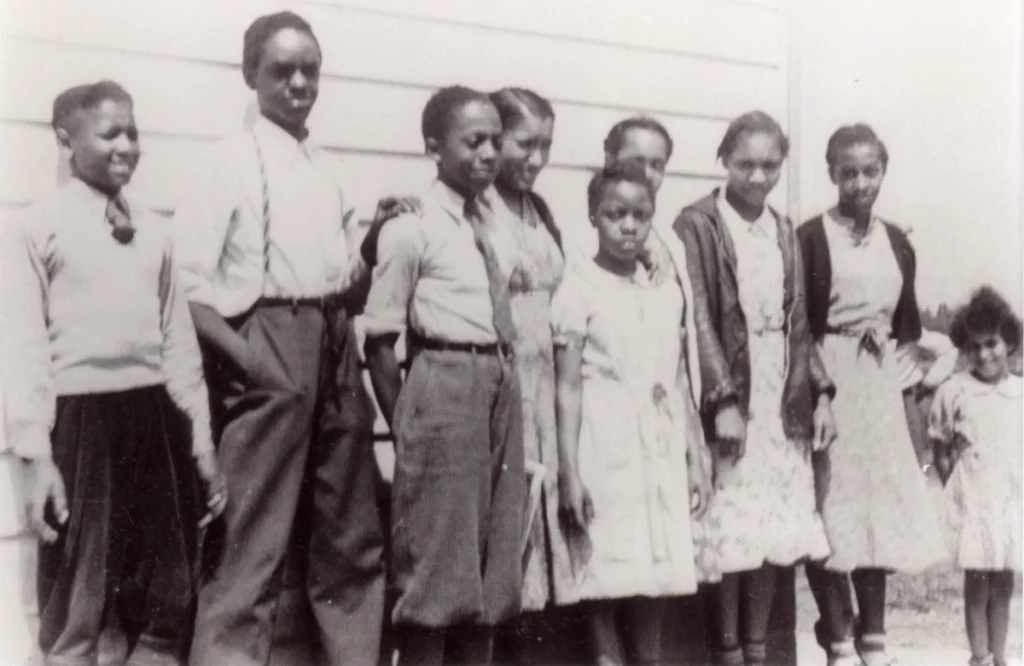
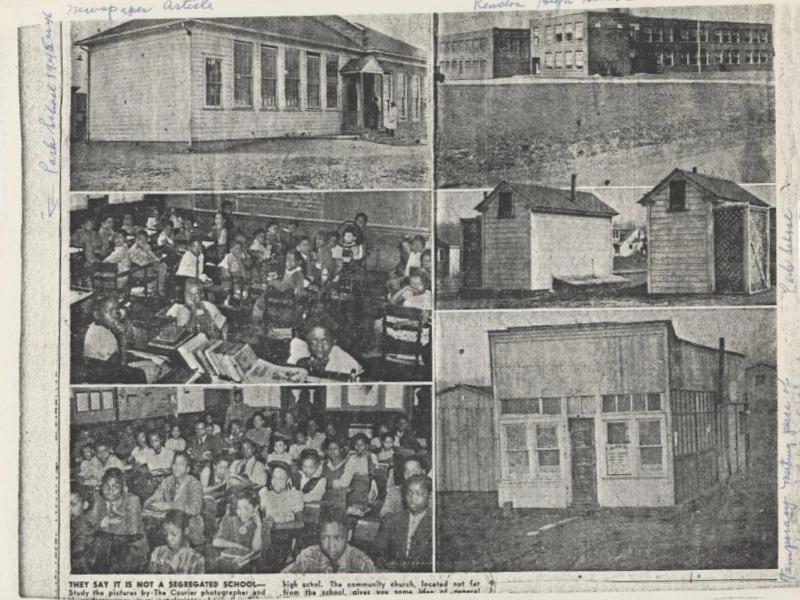
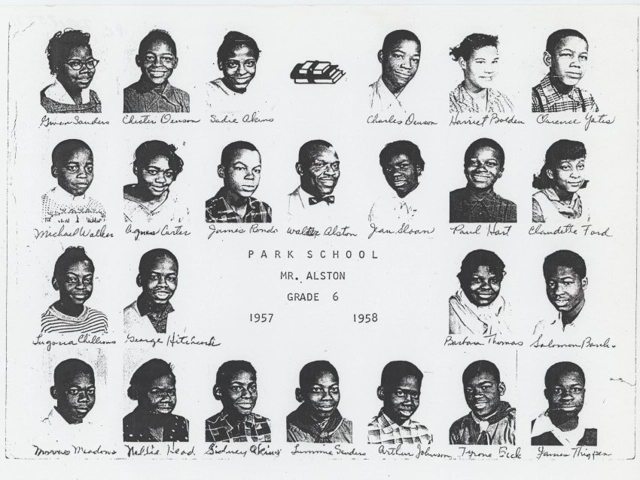
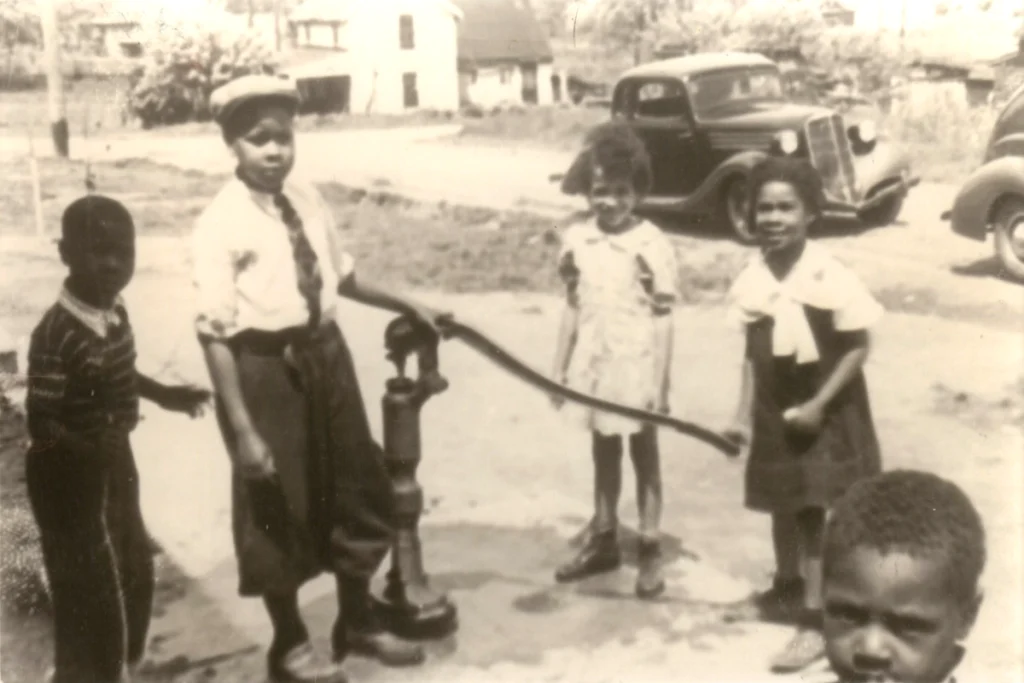
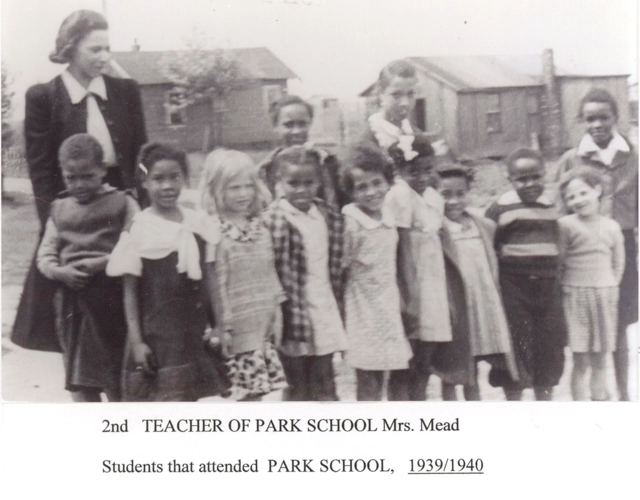
By the mid-1930s, children from the Park traveled by bus to the Bainbridge Centralized School on Chillicothe Road (State Route 306), near the present location of Bainbridge Township Hall.
In 1936, residents of Chagrin Falls Park petitioned the Bainbridge Township Board of Education to construct an elementary school closer to the Park. Twenty-two residents signed the petition, noting that more than 30 children from the Park were being transported to the Bainbridge Central School. They argued that a neighborhood school would be more practical and economical and could also serve as a community gathering place.
The petition stated:
“We the undersigned, residents and electors, of the Chagrin Falls Park Allotment in the Bainbridge Township School District, do hereby petition the Board of Education of said district to construct an elementary school building in or near said allotment…”
The petition went on to describe the distance children traveled to school and the potential value of a neighborhood school as a place for community activities.
Churches in Chagrin Falls Park
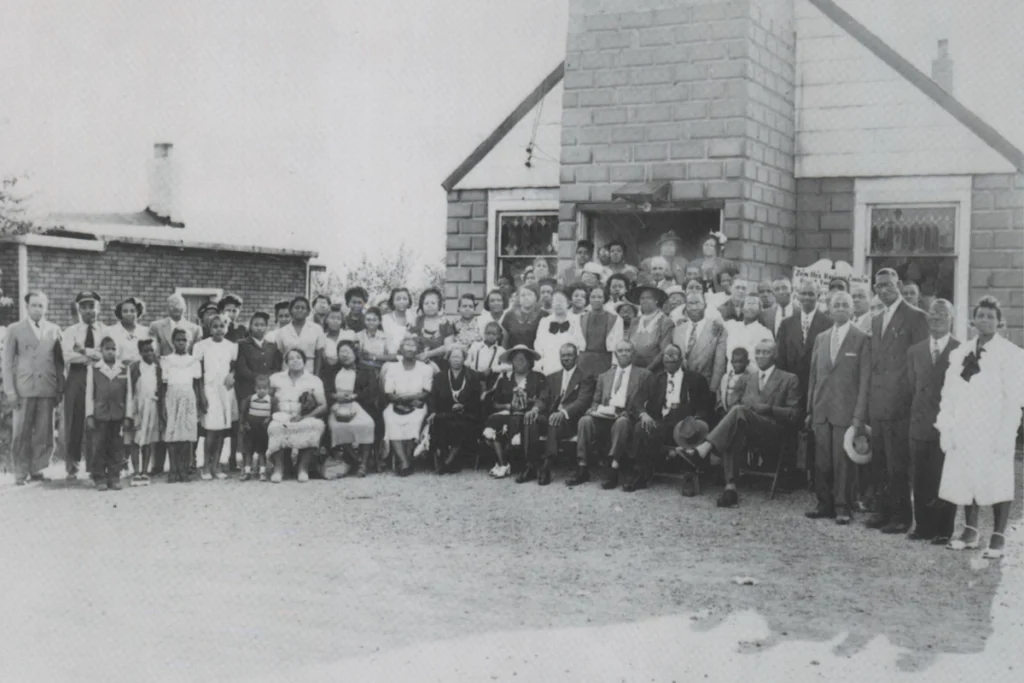
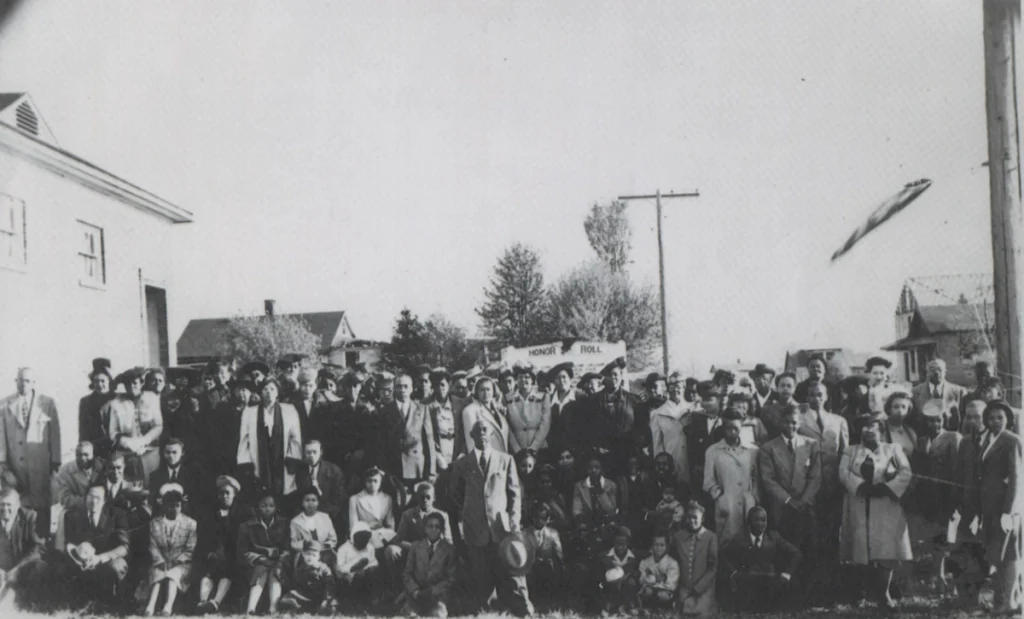
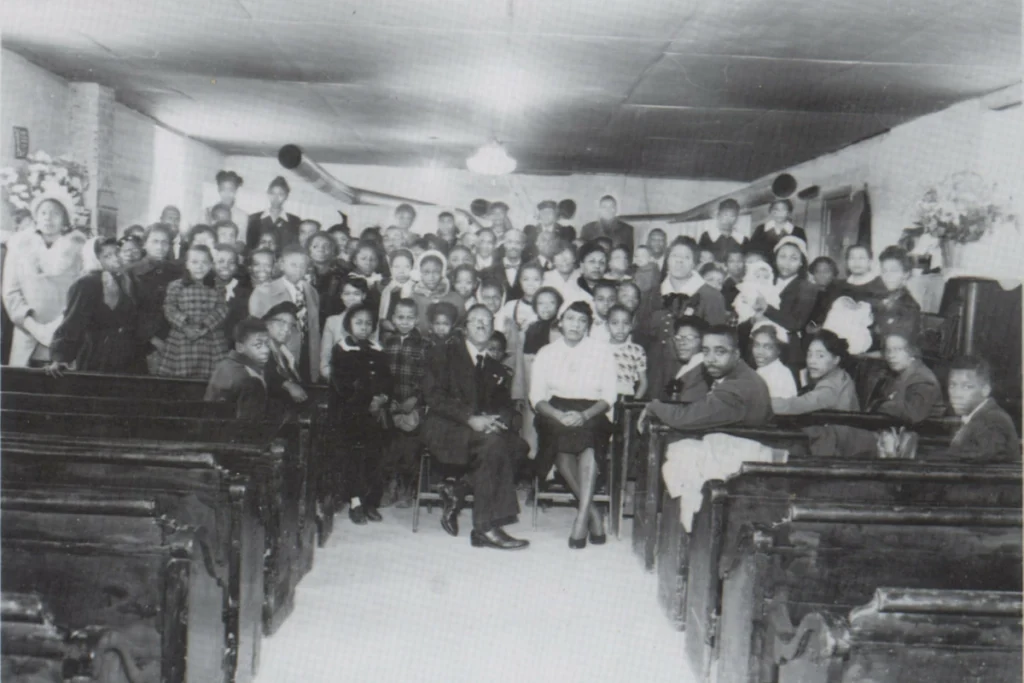
Congregation of Zion Hill Church in Chagrin Falls Park. Chagrin Falls Historical Society Photograph Collection, 2017.57.9, donated by Harriet Bolden
By the late 1920s, residents of Chagrin Falls Park had begun gathering for worship. Early services were held in a small house on the north side of Woodland Avenue at the corner of Lorain Street, owned by Art and Jennie Williams. The house no longer stands.
The congregation later moved to a house on Geneva Street that was rented from Mrs. Curry. The house was destroyed by fire, and the community decided to build a church of its own.
By late 1932 or early 1933, a small church had been completed on Huron Street. Within about a year, however, the building also burned.
Around the same time, the congregation divided. In the summer of 1933, a minister from Miles Heights came to the Park and led worship in a tent on a grassy field south of Woodland Avenue, between Kent and Lorain Streets.
Another group began meeting at Turner’s Hall on Railroad Place. This congregation eventually became Zion Hill Missionary Baptist Church. The congregation worshipping under the tent became the Original Church of God.
By the mid-1930s, both congregations were established in the Park. Although membership shifted between the two churches, many residents attended both at different times. The congregations also supported one another, working together when assistance was needed in building and community activities.
Life in the Park in the 1940s
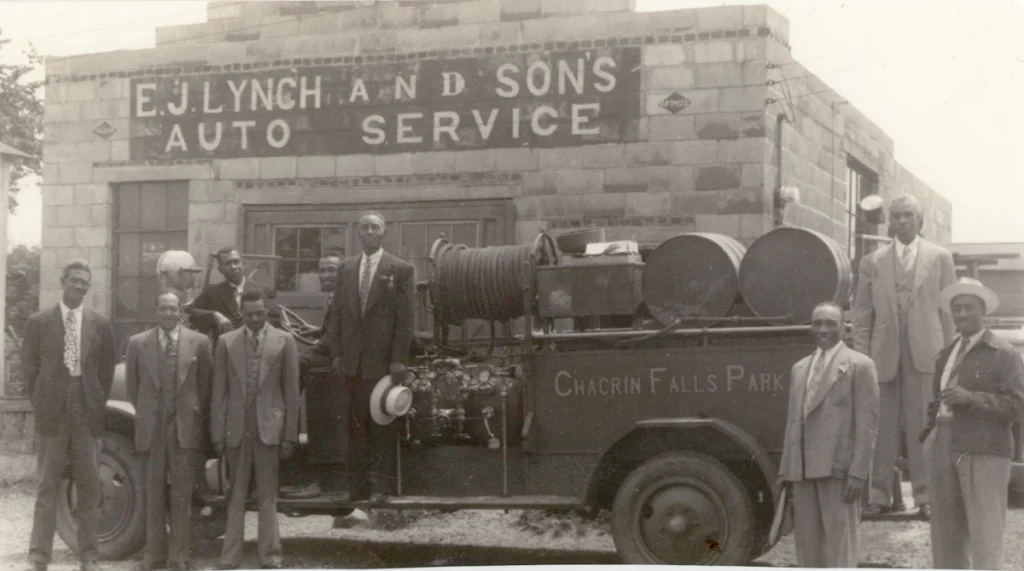
During the 1940s, Chagrin Falls Park continued to grow as a residential community. The war years brought new opportunities for employment and community involvement, while residents also created organizations and activities that strengthened connections within the Park.
Residents formed a Parent-Teacher Association, philanthropic clubs, Masonic and Elks organizations, and an active local chapter of the NAACP. Women in the community and across the country, volunteered with the Red Cross during the war years.
Music and fundraising also became important parts of community life. A singing group known as the Echo Singers performed throughout the area and in Detroit to raise money. Their proceeds were used to provide holiday care baskets for families in need and to support church and road improvements.
Another group of Park women, known as the Thrift Sisters, raised funds through barbecues and the sale of baked goods and handicrafts. Grace Bolden and Magnolia Strickland were among its members. The group’s activities would eventually contribute to the idea of establishing a community center in the Park.
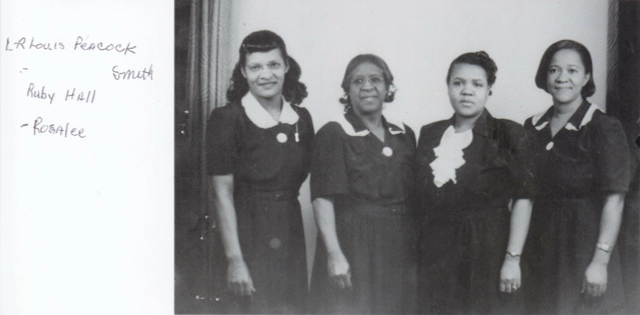
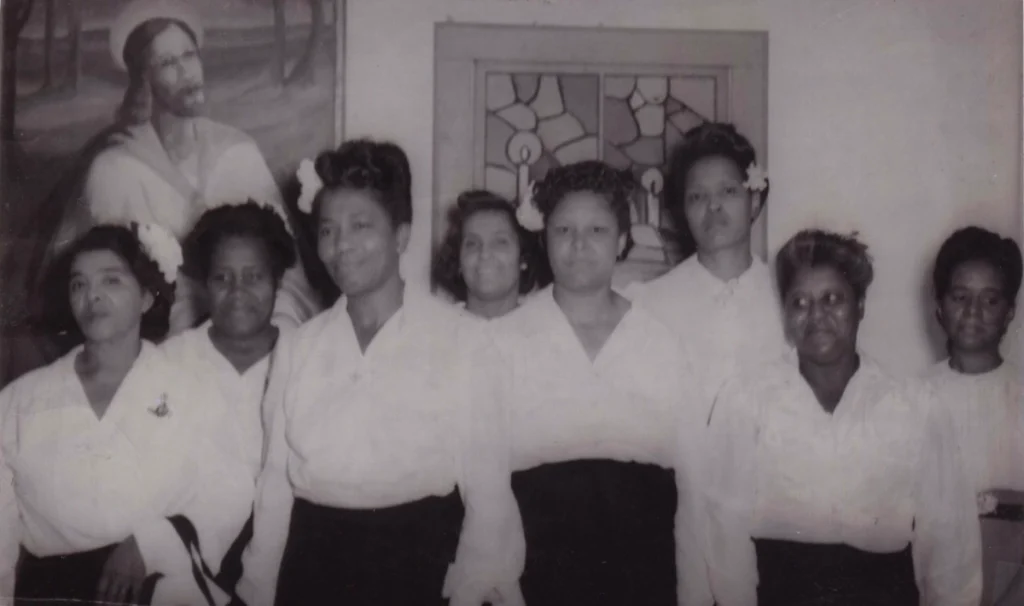
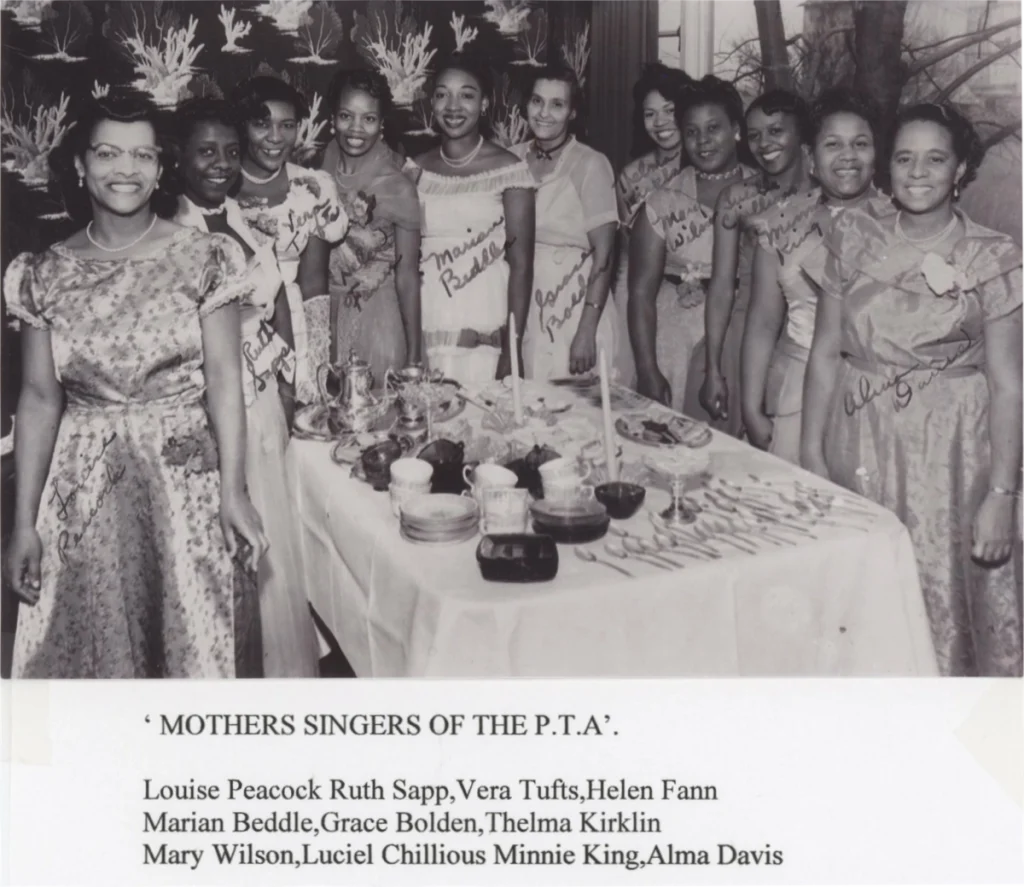
In May 1940, residents also organized the Geauga County Republican Club, holding meetings at Turner’s Hall on Railroad Place. Republican clubs were common throughout Cleveland and surrounding communities at the time. For Park residents, the organization provided a way to become more involved in county and local government.
By the late 1940s, more than 700 people lived in Chagrin Falls Park. The community had four churches, a fire department, and numerous small businesses.
Building a Community Center
By the end of the 1940s, residents increasingly recognized the need for organized activities, particularly recreation for children in the Park.
Women in the community began raising money to hire someone to provide summer programming. They received contributions from employers for whom they worked in homes throughout the Chagrin Valley, as well as donations from Chagrin Falls residents and others throughout the area. Fundraising picnics organized through the local Republican Club also contributed to the effort.
In early 1950, the community hired Edward Bowman, a young Army veteran, to lead its first summer recreation program in the school building. More than 100 children registered. Activities included handicrafts, Bible stories, music, and a variety of sports.
The program was organized and staffed by Park residents. As interest grew, residents and supporters from surrounding communities began working together to raise money for a permanent community center.

The First Building
The residence pictured here, dated 1950 and identified on the back as the home of the postal clerk, later became the first home of the Chagrin Falls Park Community Center.
The group eventually acquired a building that had previously been part of a mink farm. In the early 1950s, Judge William K. Thomas, a Chagrin Falls resident and Geauga County Common Pleas judge, joined the effort along with Reverend John Townsend and members of the Chagrin Falls Junior Women’s Club (CFJWC).
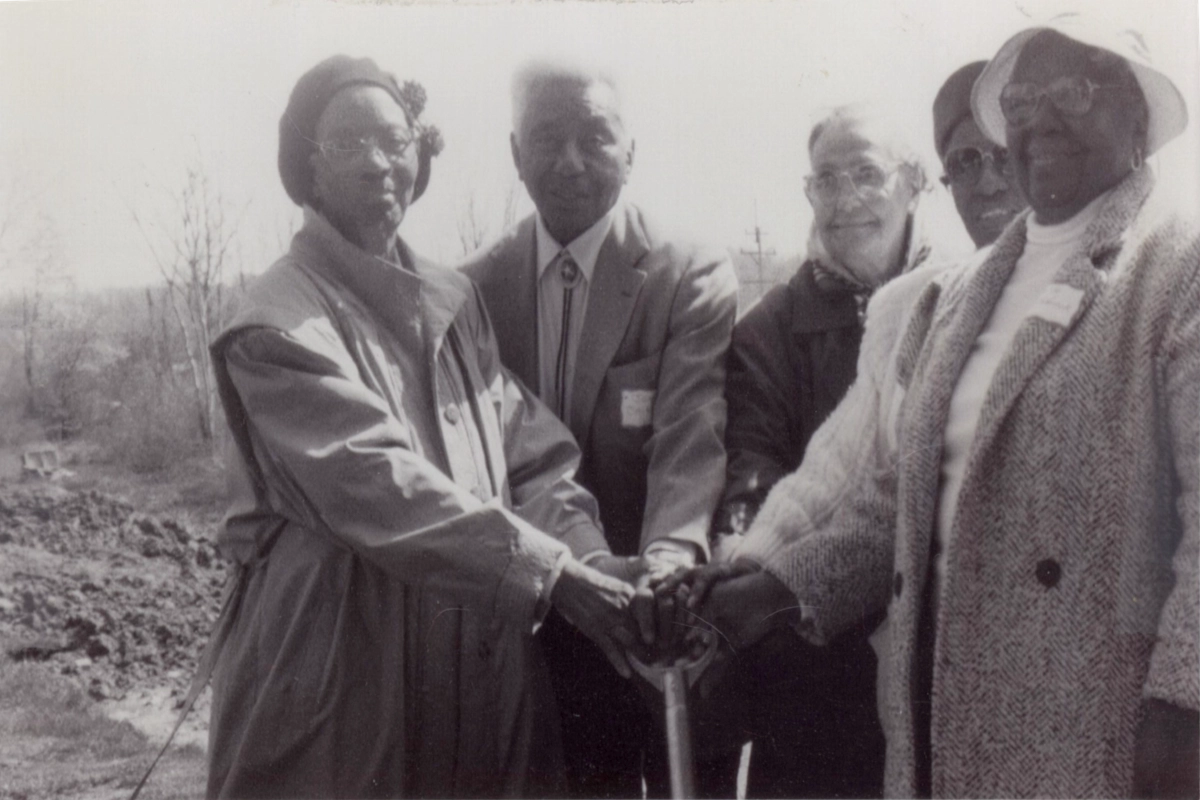
Breaking Ground for the Community Center
Left to Right: Lula Hitchcock, James Jackson, Grace Bolden, Fanny Detwyler, Lucille Hitchcock
The Chagrin Falls Park Community Center was established as a 501(c)(3) nonprofit organization in 1951. In 1952, the CFJWC received a $10,000 grant from The Kroger Co. The funding provided additional space for the Community Center and helped expand its programs.
The Community Center became an important institution in the life of Chagrin Falls Park, providing programs and services related to health, recreation, education, and family support.
A Community Effort

Front Row, L to R: Eloise Green, Mattie Pounds, Lillian Paris, Bessie Collins, Clara Adams, Magnolia Strickland, Viola Thomas, Leola Bryant, Daisy Ritchie, Grace Bolden.
Back Row, L to R: Steve Hall, Emory J. Lynch, Rev. William Peavy, William Brown, Elder George King, Rev. Ben L. Davis, Rev. Norman Spencer, Julius Harding, Willie Calloway, Elijah Norman.
This photograph was taken in the Park School, a one-room schoolhouse in Chagrin Falls Park. The committee pictured here was made up of Park residents. Another committee of people who lived outside the community also met with the group to elect the trustees of the Chagrin Falls Park Community Center.
Chagrin Falls History Center & Museum Photograph Collection, 2017.57.1. Donated by Harriet Bolden.
The creation of the Community Center was a community effort, bringing together Park residents, neighboring communities, local organizations, and individual supporters. It reflected the residents’ ability to identify their own needs, organize around them, and build institutions that would serve generations of families.
A Community That Endures
The history of Chagrin Falls Park is more than the story of how a piece of land was subdivided and sold. It is the story of people who built homes, raised families, worked, worshipped, organized, advocated for their children, and created institutions to support one another.
The Community Center became one of the most visible expressions of that effort. Its history illustrates the way residents and supporters worked together to create opportunities for children and families and to strengthen connections between the Park and surrounding communities.
Today, the Chagrin Falls Park Community Center continues that work, supporting individuals and families and providing programs and services to the community.
In 2019, the Community Center reported providing 32,194 meals, 42 workshops, and assistance that helped 94% of participating families move toward their goals.
More information about the Community Center’s current programs and services is available through its website.
Additional Reading
Dissertation: Institutional Agents in the Lives of Chagrin Falls Park Youth
https://engagedscholarship.csuohio.edu/etdarchive/884?utm_source=engagedscholarship.csuohio.edu%2Fetdarchive%2F884&utm_medium=PDF&utm_campaign=PDFCoverPages
Alison Taylor Kaufman
Article: Residents Recall Days Gone By at Chagrin Falls Park Community
Chagrin Valley Today
By JOAN DEMIRJIAN
Mar 1, 2018
Article: Black History: Chagrin Falls Park Home to Generations
Chagrin Valley Today
By JOAN DEMIRJIAN
Feb 18, 2015 Updated Feb 20, 2015