
Artist, Writer, Educator, and Physician
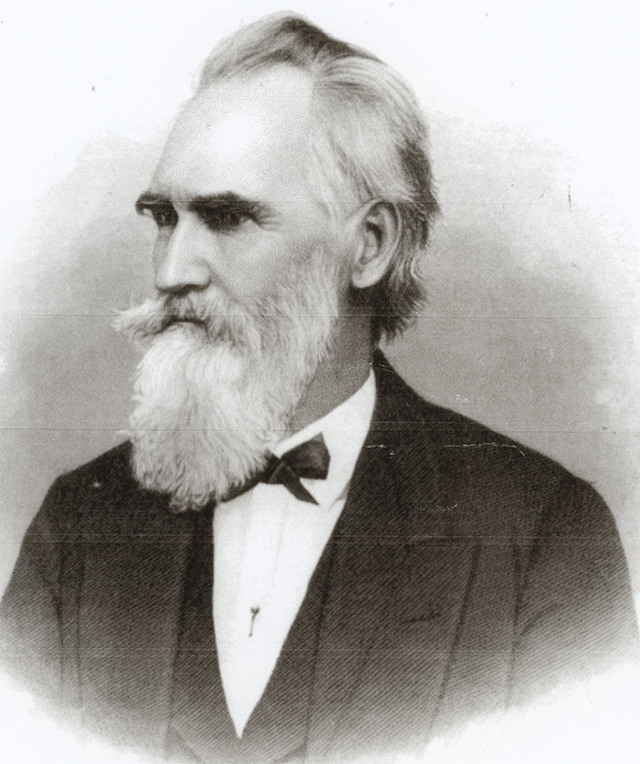
Jehu Brainerd (1808–1878) played a fascinating role in the early history of Chagrin Falls, Ohio. An accomplished engraver, woodcut artist, writer, educator, abolitionist, and physician, Brainerd documented early life in Chagrin Falls while later establishing himself as a respected educator and medical professor in Cleveland.
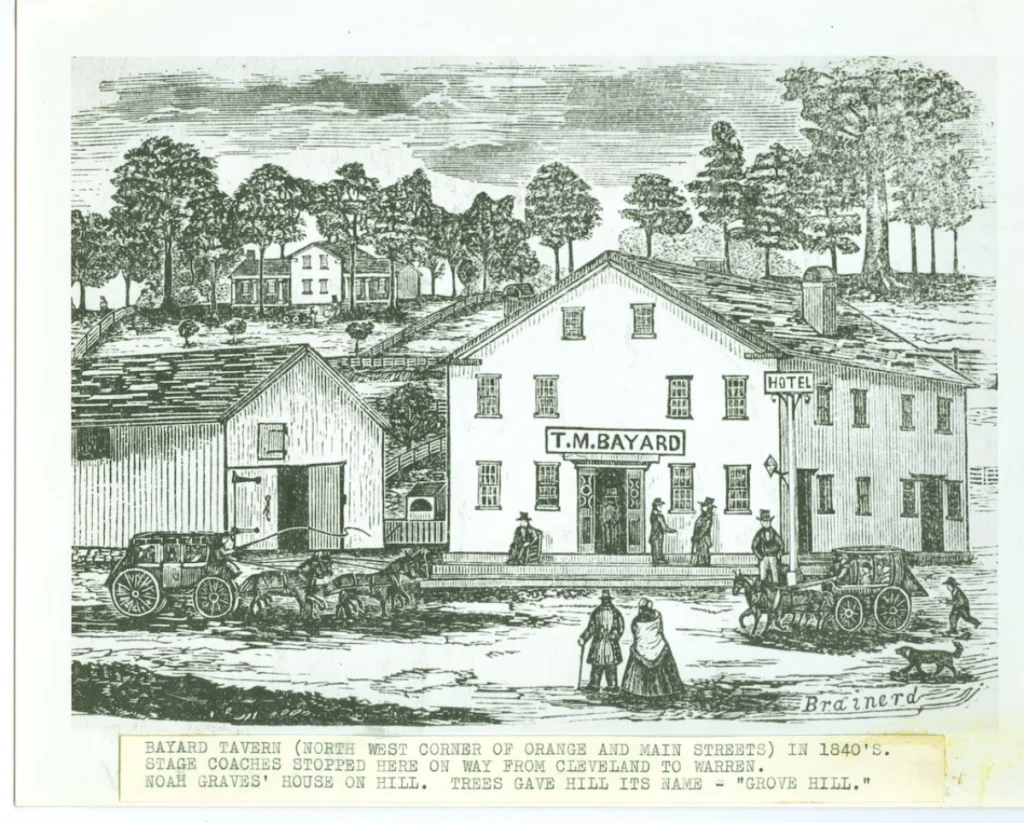
Jehu Brainerd’s Woodcuts of Early Chagrin Falls
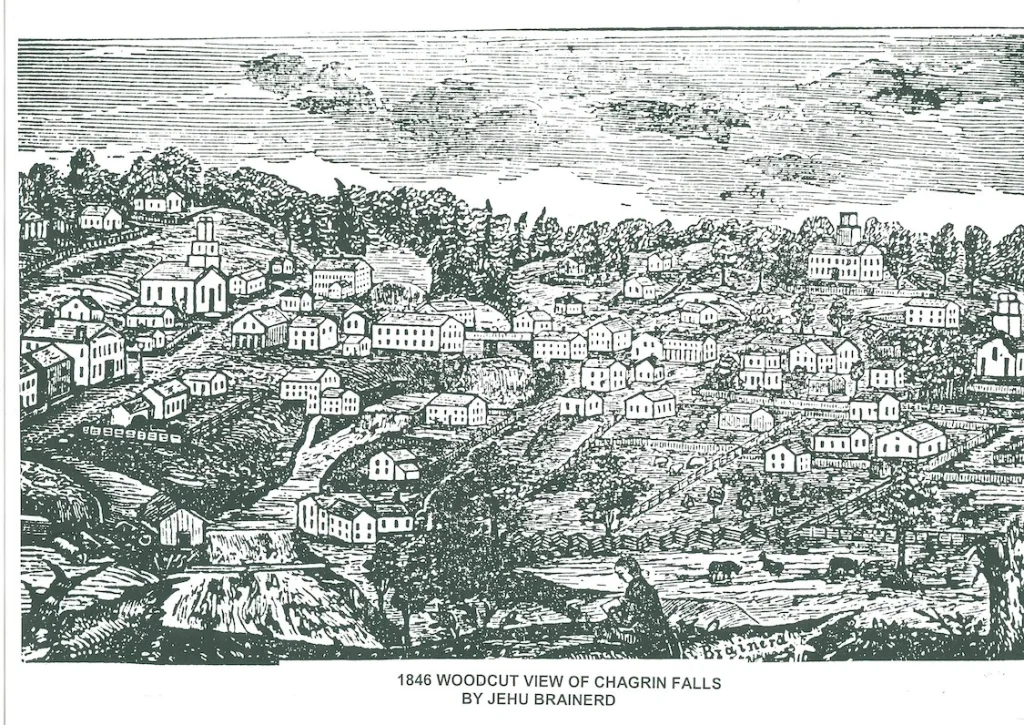
Brainerd created several woodcuts depicting early life in Chagrin Falls, providing valuable visual records of the community during its formative years.
His best-known woodcut, depicting a view overlooking the village of Chagrin Falls, was first published in Howe’s Historical Collections of Ohio in 1846. The image offers an important glimpse into the appearance of the growing village during the nineteenth century and remains an important piece of Chagrin Falls historical documentation.
The Farmers’ & Mechanics’ Journal
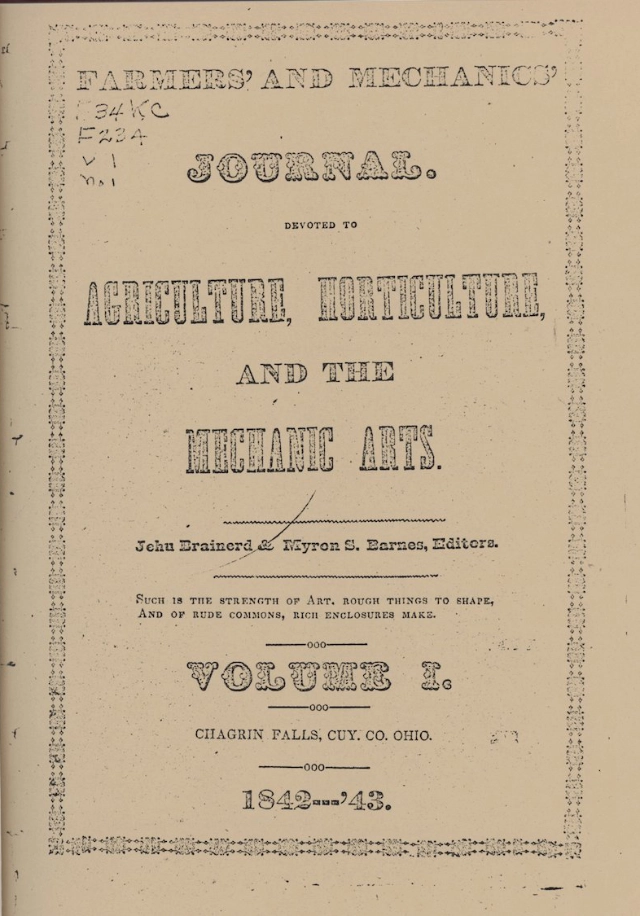
Brainerd was also an active writer and publisher. In 1842, he partnered with Myron Barnes to publish the Farmers’ & Mechanics’ Journal. The publication provided readers with agricultural advice, practical information, and commentary on everyday life, reflecting the interests and concerns of Ohio’s growing farming and business communities.
In 1844, Brainerd sold his interest in the journal and moved to Cleveland, where he supported his family through his work as an engraver.
Teaching Natural History and Drawing in Cleveland
Brainerd’s career soon expanded beyond engraving and publishing. In 1847, he became a teacher of natural history and drawing for the Cleveland schools. He not only taught the courses but also developed the curriculum and wrote the instructional text used for the program.
His combination of artistic ability and scientific knowledge made him particularly well suited to teaching subjects that required both careful observation and technical skill.
Jehu Brainerd and the Abolitionist Movement
During the 1840s and 1850s, Brainerd was an active abolitionist. He participated in a variety of anti-slavery organizations during the years leading up to the Civil War.
His involvement reflected the growing anti-slavery movement in northeastern Ohio, where many communities became active centers of abolitionist activity and reform.
Professor at Cleveland Homeopathic College
In 1850, the Cleveland Homeopathic College was established, and Brainerd became one of its first professors. Over the following fifteen years, he taught a wide range of subjects, including:
- Natural history
- Botany
- Medical jurisprudence
- Chemistry
- Histology
- Anatomy
His broad academic background in science, art, and natural history contributed to his ability to teach the increasingly specialized subjects required in medical education.
Service as a Union Army Physician
During the Civil War, Brainerd put his medical training to service for the Union cause. He volunteered as a physician for the Union Army, contributing his skills to the medical care of soldiers during the conflict.
Jehu Brainerd’s Legacy
Jehu Brainerd’s life encompassed many of the intellectual, cultural, and social movements that shaped nineteenth-century northeastern Ohio. From his woodcuts documenting early Chagrin Falls to his work as a publisher, teacher, abolitionist, medical professor, and Civil War physician, Brainerd made significant contributions in several different fields.
For Chagrin Falls, his woodcuts are particularly valuable. They provide a rare visual record of the village during its early development and help preserve the history and appearance of the community in the nineteenth century.aste text here