


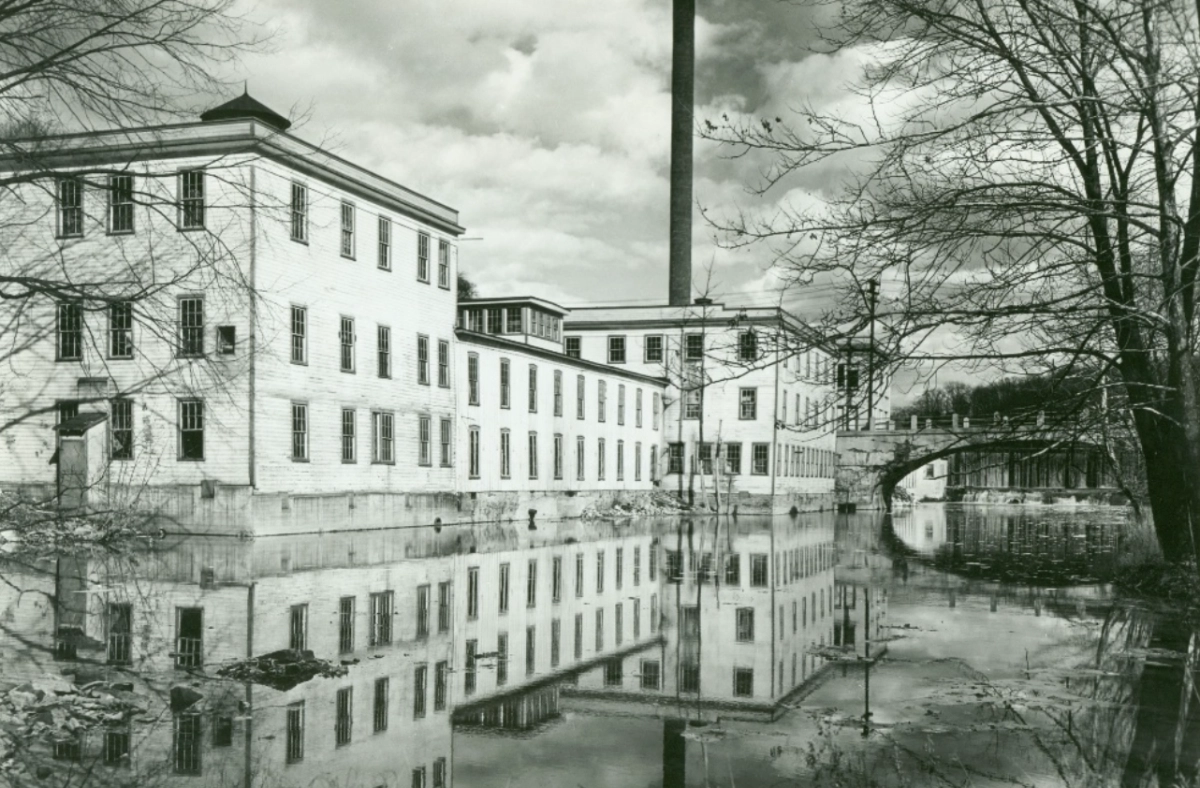

Bliss and Mayhew’s Flouring Mill: An Early Chagrin Falls Industry
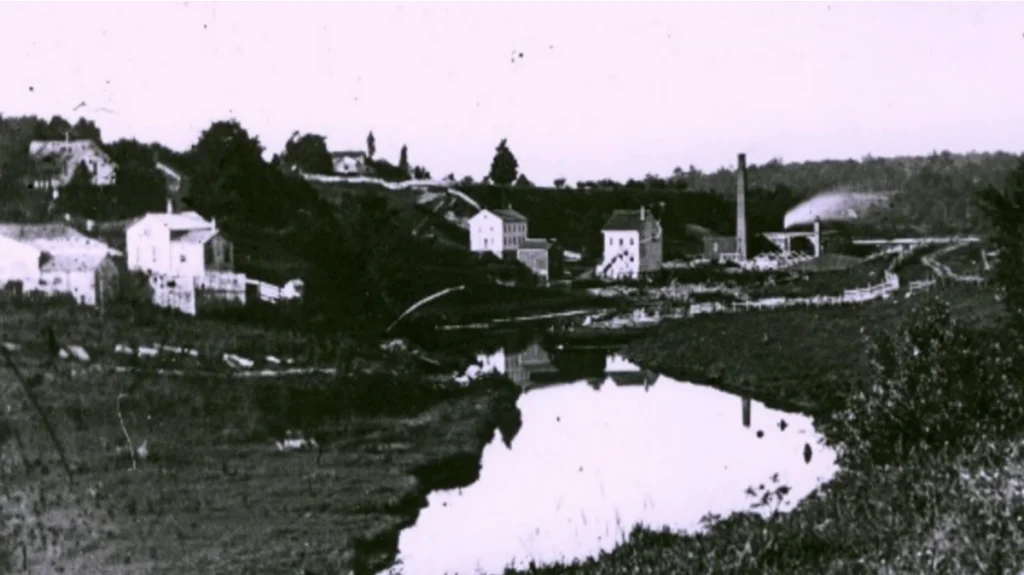
The history of Chagrin Falls is closely tied to the power of the Chagrin River and the many mills that once lined its banks. Among these early industries was the Bliss and Mayhew Flouring Mill, a significant but often overlooked business that helped shape the village’s industrial development during the nineteenth century.
Aaron Bliss and the Construction of the Flouring Mill
Aaron Bliss, known as the owner of the first store in Chagrin Falls, partnered with John Mayhew to construct a flouring mill on Cleveland Street. The mill stood above the Cleveland Street bridge and utilized the water power of the Chagrin River to process grain for local farmers and businesses.
Contemporary accounts praised the quality of the facility. The Farmer’s and Mechanic’s Journal described the mill as “splendid in construction” and noted its ability to compete with larger flour mills while operating with similar machinery. This recognition highlights the importance of the mill within the growing economy of Chagrin Falls.
Challenges of Wheat Farming in the Western Reserve
Although the flouring mill was well-built and strategically located, agricultural conditions in the Western Reserve presented challenges. Historical records indicate that the region was not ideally suited for large-scale wheat production. As a result, local farming patterns began to change, reducing the demand for flour milling services.
As agriculture evolved, dairy farming and sheep raising became increasingly important throughout northeastern Ohio. These shifts would ultimately influence the future of the Bliss and Mayhew enterprise.
Transition from a Flouring Mill to a Woolen Mill
Recognizing changing market conditions, Aaron Bliss and his associates adapted their business strategy. The flouring operation was discontinued, and Bliss partnered with Samuel Pool to convert the facility into a woolen mill.
The transition reflected broader economic trends in the Chagrin Valley, where wool production and textile manufacturing became important industries. The conversion allowed the mill to continue serving the community while responding to the changing needs of local farmers and consumers.
Flood Damage and New Ownership
Like many businesses located along the Chagrin River, the mill faced the constant threat of flooding. One of the numerous floods that affected riverfront industries caused significant damage to both the mill and its dam.
Following this setback, Bliss and Pool sold the property to the Lake Erie Paper Company. They manufactured newsprint for the Cleveland Leader newspaper until a fire destroyed the operation in 1854.
The Adams Bag Company
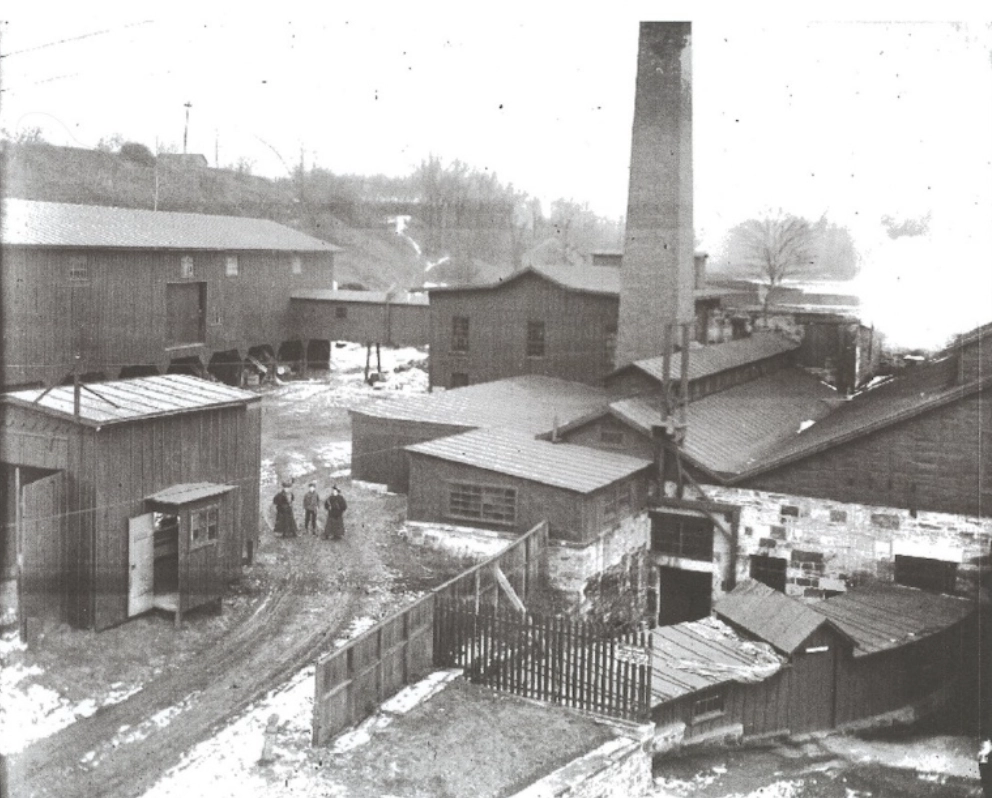
The property changed hands several times before brothers Fitch and Alfred Adams purchased the business in 1867. Under their ownership, the mill began producing paper from Manila rope, a material that became an important part of its manufacturing operations.
From Manila Rope to the Famous Neverburst Flour Bags
During the Civil War, cotton was difficult to obtain in the northern states. As a result, paper mills increasingly used alternative materials to manufacture bags and other products.
The Adams mill produced paper from hemp grown in the Philippines rather than cotton. As rope sacks and paper bags became more widely used, the business found opportunities to expand its production.
One of the company’s best-known products was its “Neverburst” flour bags, which became a recognizable product of the Adams Bag Company. The mill also manufactured bags for a variety of commercial purposes, helping establish its reputation as an important local manufacturer.
Expansion of the Adams Bag Company in the 1870s and 1880s
The 1870s marked a period of growth for the Adams mill. In 1874, an oil house, stock house, and carriage house were added to the property, expanding the mill complex.
By the turn of the century, concrete sacks had also become part of the company’s product line as concrete construction became more common.
The business continued to grow, and by 1882 the Adams mill employed 55 workers, making it one of the largest employers in Chagrin Falls. Many employees spent most of their working lives at the bag factory, establishing strong ties between the company and the community.
Alfred Adams lived with his family in a large house on Summit Street, which had been incorporated into the village.
The Adams Bag Company in the Early 1900s
As the company expanded, its products reached customers beyond Chagrin Falls. The mill manufactured paper bags for a range of materials, including flour, feed, lime, charcoal, meal, talc, coke, and clay.
By 1914, the company was manufacturing 81 different types and sizes of bags, demonstrating the breadth of its product line.
World War I and the Adams Bag Company Workforce
During World War I, many young men from Chagrin Falls joined the armed forces. Women and girls took their places in the factory, helping maintain production while the war continued.
The company advertised for female workers, offering wages of 25 to 27 cents per hour for a nine-hour workday, with Saturday afternoons off. Experience was not required.
The Adams Bag Company was classified as an essential industry during the war. Its products included bags used to transport flour and cereal, making the mill an important part of the supply chain for everyday goods.
The 1923 Purchase by the Chase Bag Company
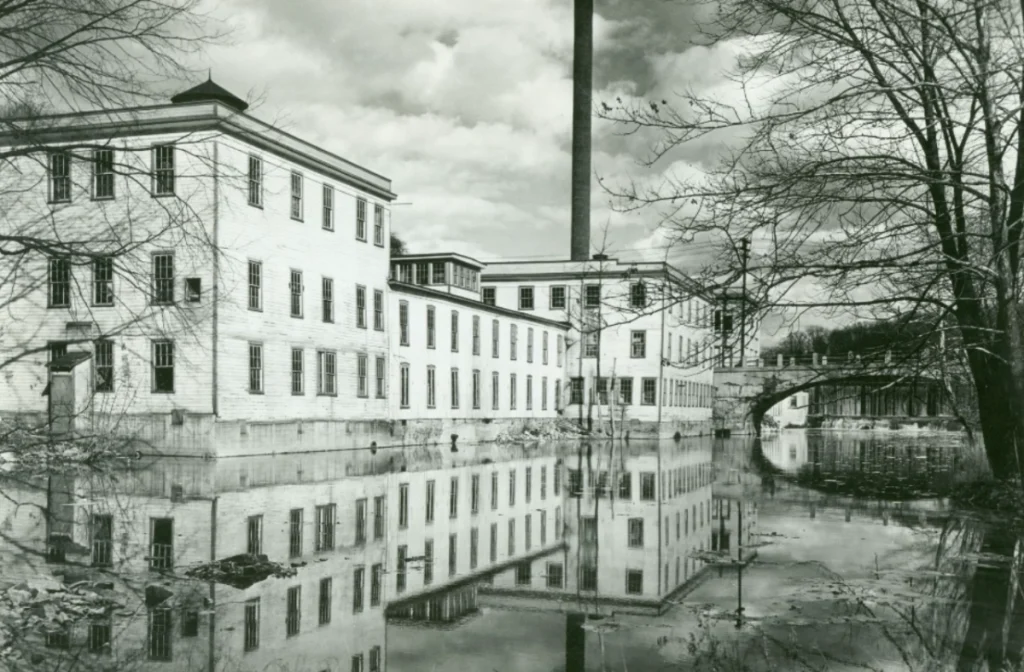
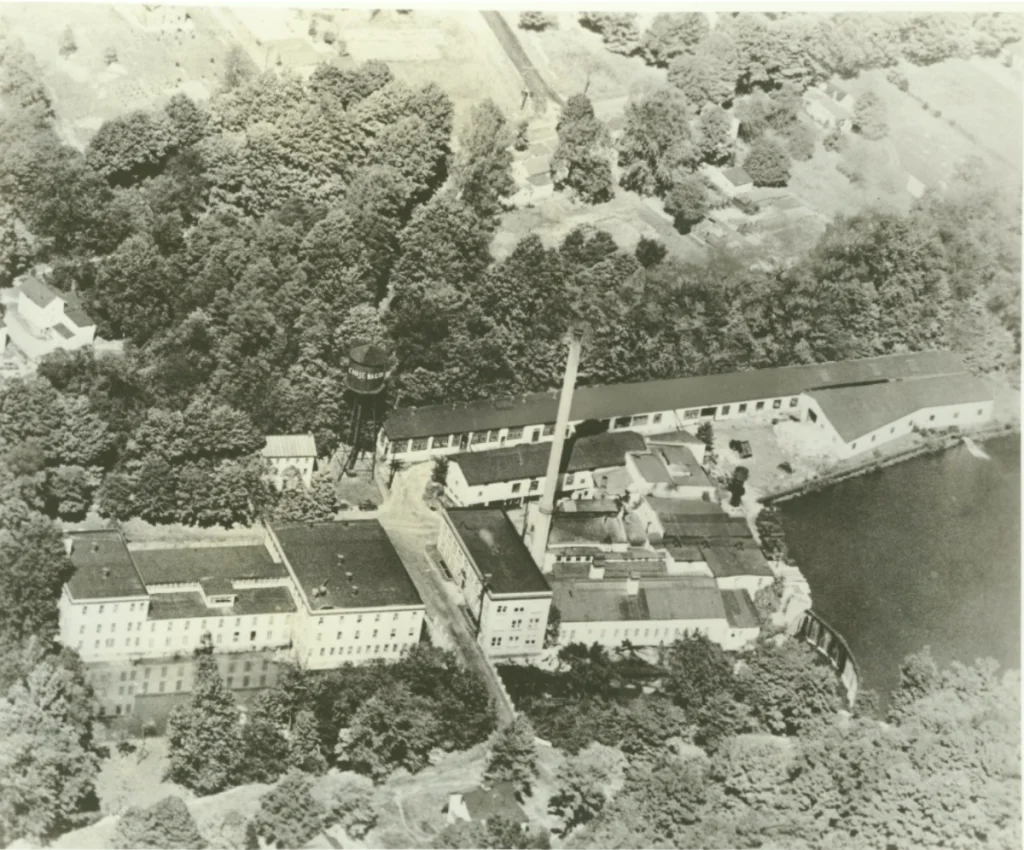
In 1923, the Chase Bag Company purchased the mill. With increased mechanization, production reached approximately 12 to 14 tons of paper per day.
The business continued manufacturing flour sacks and paper products, including tobacco bags by the 1940s. Its changing product line reflected the company’s ability to adapt to new manufacturing needs and markets.
Paper Products and Community Life in Chagrin Falls
For generations of Chagrin Falls schoolchildren, one of the mill’s most familiar products was the white paper used with blue backing in school projects, posters, and banners.
Although the mill was an industrial operation serving customers throughout the country, its presence was also part of everyday life in the village. The factory provided employment for local residents and represented the manufacturing heritage that had helped shape Chagrin Falls.
The Later History of the Paper Mill
The paper mill continued operating under successive owners long after the Adams family era. In 1990, the Ivex Company purchased the paper mill. In 2000, the Alcoa Company acquired Ivex, continuing the property’s connection to the paper industry.
The mill’s long history—from its origins as a flour and woolen mill to its development as a paper mill and bag manufacturer—reflects the evolution of industry in Chagrin Falls.
The Lasting Legacy of the Cleveland Street Papermill
The papermill at this location was an important part of Chagrin Falls history. Its growth illustrates how local businesses helped build the village’s economy, provided employment for generations of residents, and supplied products to customers across the country.
Although the industrial landscape has changed, the story of the Cleveland Street paper mill preserves a significant chapter in the history of Chagrin Falls, Ohio.
For more than 150 years, this section of Chagrin Falls has remained associated with industry, demonstrating the enduring importance of the river and its water power to the village’s economic development.