



An Early Manufacturing Business in Chagrin Falls
Establishing the Bullard Woodenware Mill
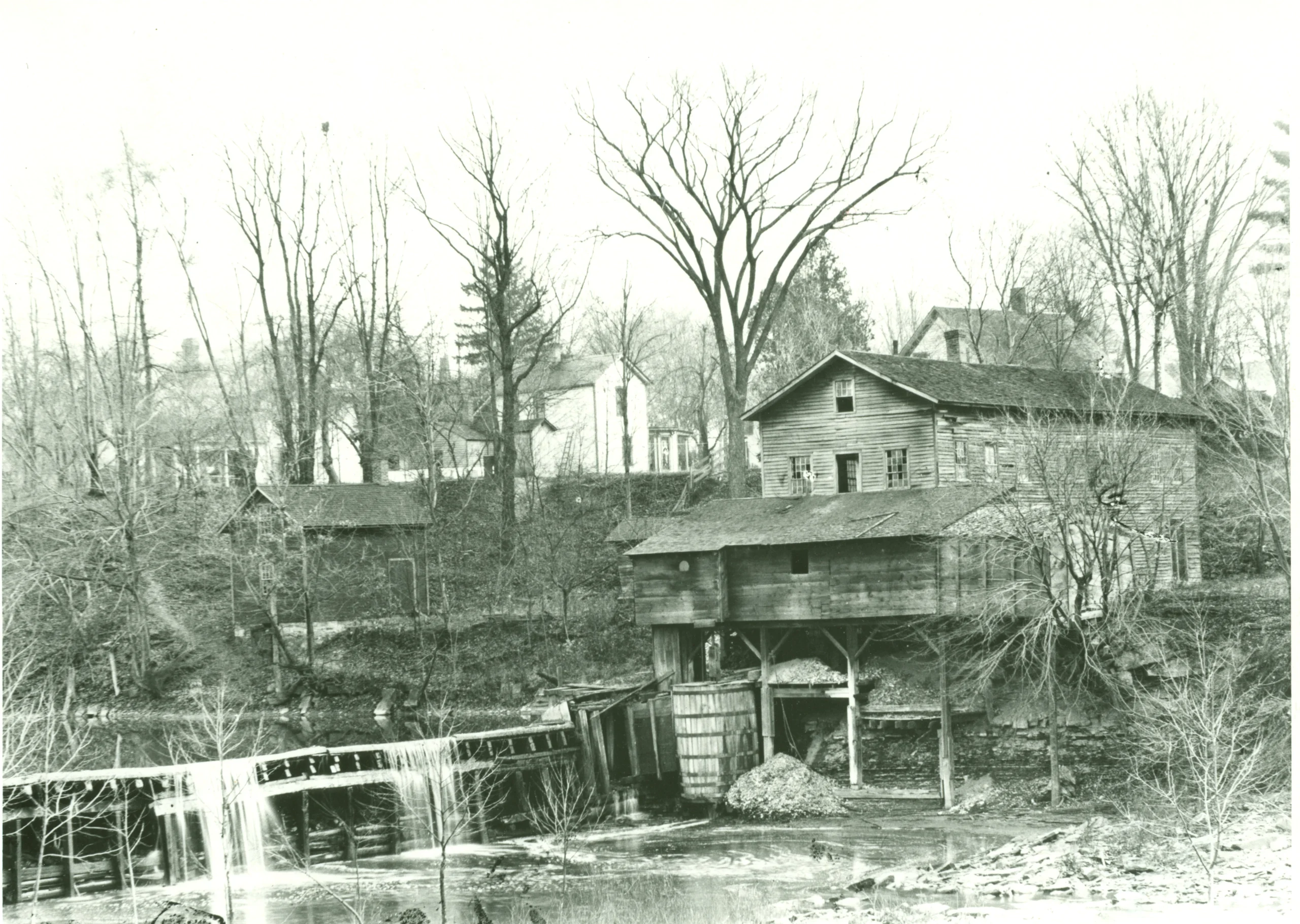
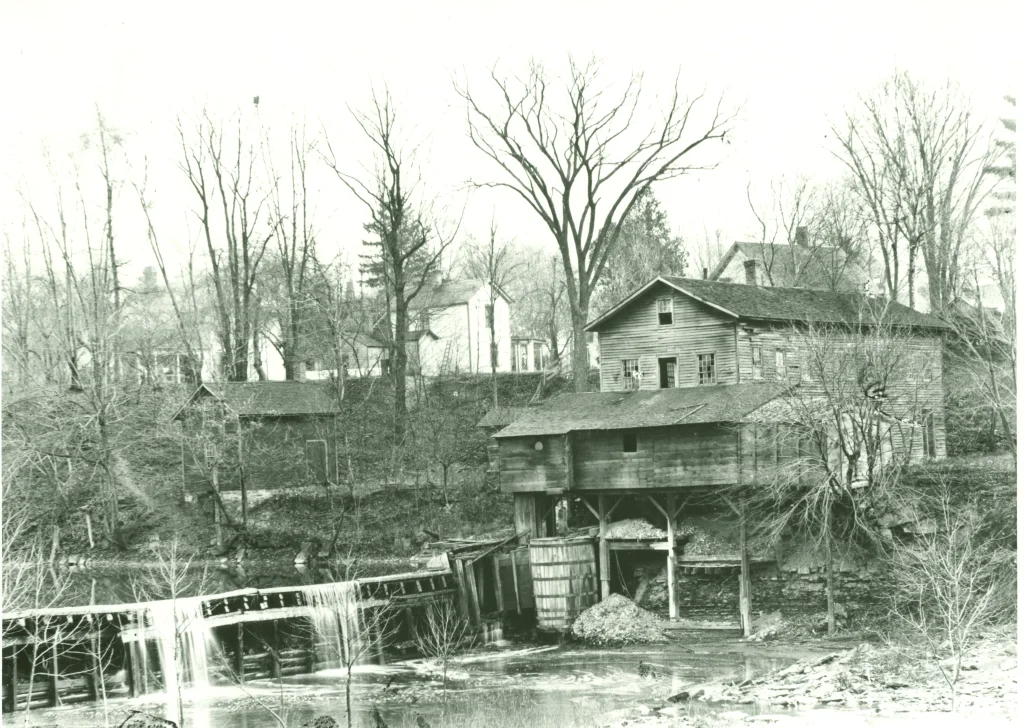
The Bullard Woodenware Mill was founded in 1842 by Curtis Bullard and Cornelius Northrup, becoming one of the earliest manufacturing enterprises in Chagrin Falls. The mill was located on the south side of the Chagrin River at the end of Water Street, where it utilized water power to drive its machinery and production operations.
Initially, the company specialized in the manufacture of spinning wheels and wheat headers, products that supported the agricultural economy of Northeast Ohio during the mid-nineteenth century. Soon Curtis’s son, John, joined the business.
Water Power and the Wooden Dam
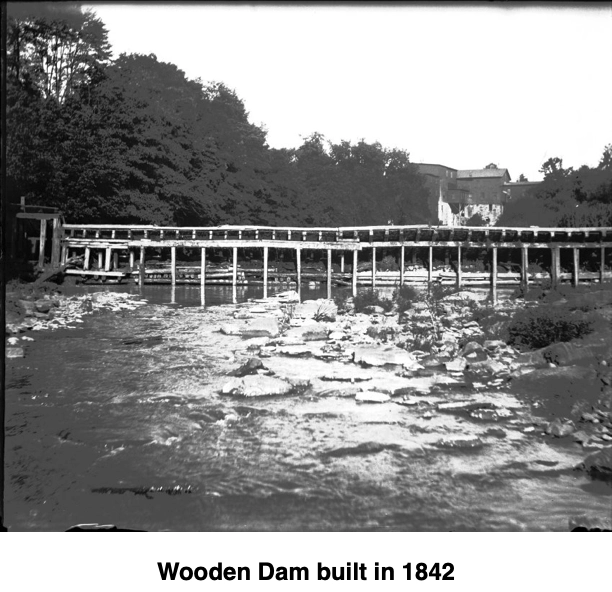
Like many early industries in Chagrin Falls, the Bullard Woodenware Mill relied on water power generated by the Chagrin River. A wooden dam, constructed just west of the natural falls, provided the energy needed to operate the mill’s equipment and sustain production.
Expansion into Kitchenware Manufacturing
During the 1850s, the company diversified its product line to meet growing consumer demand. In addition to agricultural equipment, the mill began producing a variety of wooden household items, including:
- Rolling pins
- Potato mashers
- Steak pounders
- Other handcrafted kitchen utensils
These products became popular throughout the region and helped establish the company as a leading woodenware manufacturer.
The Rise of the Butter Mold Industry
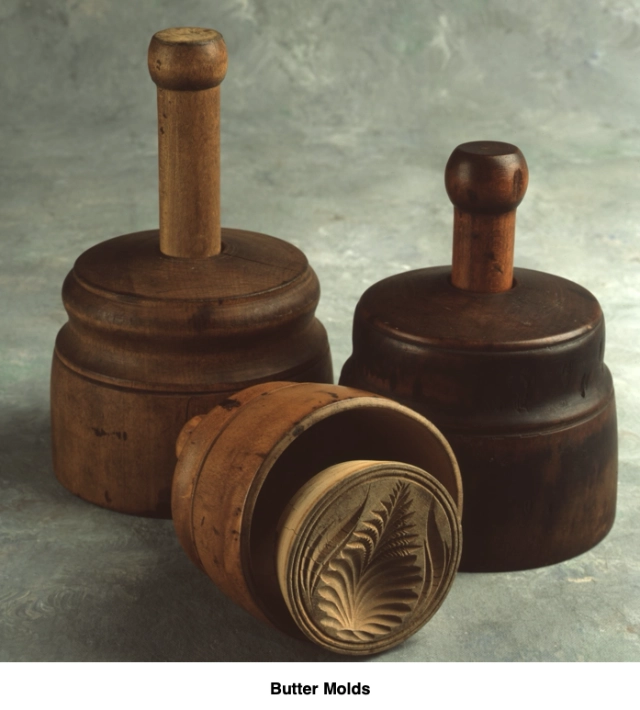
One of the company’s most successful ventures was the production of butter molds. Introduced during the 1850s, these molds were manufactured in a wide range of sizes, shapes, and decorative patterns to meet the needs of both commercial dairies and home butter makers.
A National Leader in Butter Mold Manufacturing
John Bullard received a patent for a machine designed to manufacture butter molds more efficiently, allowing the business to grow from a cottage industry to a factory industry. As demand increased, Bullard Woodenware became one of the leading producers of butter molds in the United States.
By 1877, the company was estimated to produce approximately 250,000 butter molds annually, making it one of the most successful manufacturing operations in Chagrin Falls during the nineteenth century.
Bullard and March Company
As the business continued to grow, employee George March became a partner in the operation. Following his investment, the company became known as the Bullard and March Company, reflecting the new ownership structure and the firm’s continued expansion.
The Flood of 1883 and Declining Business
Despite its success, the company faced significant challenges. The devastating flood of 1883 caused extensive damage to the mill and disrupted operations. Although the business recovered and continued production, changing market conditions eventually led to its decline.
By 1895, demand for butter molds had largely disappeared. At the same time, local timber resources became increasingly scarce, making it difficult to obtain the lumber necessary for manufacturing wooden products.
The Great Flood of 1913 Ends an Era
After the mill ceased operations, the site remained largely inactive. The final chapter in the property’s industrial history came with the Great Flood of 1913, which destroyed both the wooden dam and the remaining factory structures.
Today, the story of Bullard Woodenware remains an important part of Chagrin Falls history, illustrating how water-powered manufacturing helped transform the village into a thriving industrial center during the nineteenth century.
Legacy of Bullard Woodenware

The Bullard Woodenware Mill exemplifies the ingenuity and entrepreneurship that fueled the growth of early Chagrin Falls. From spinning wheels and kitchen utensils to nationally recognized butter molds, the company played a significant role in the village’s manufacturing heritage and remains a fascinating chapter in the history of historic Chagrin Falls.