



A Landmark in Chagrin Falls History
The Early Ownership of the Property
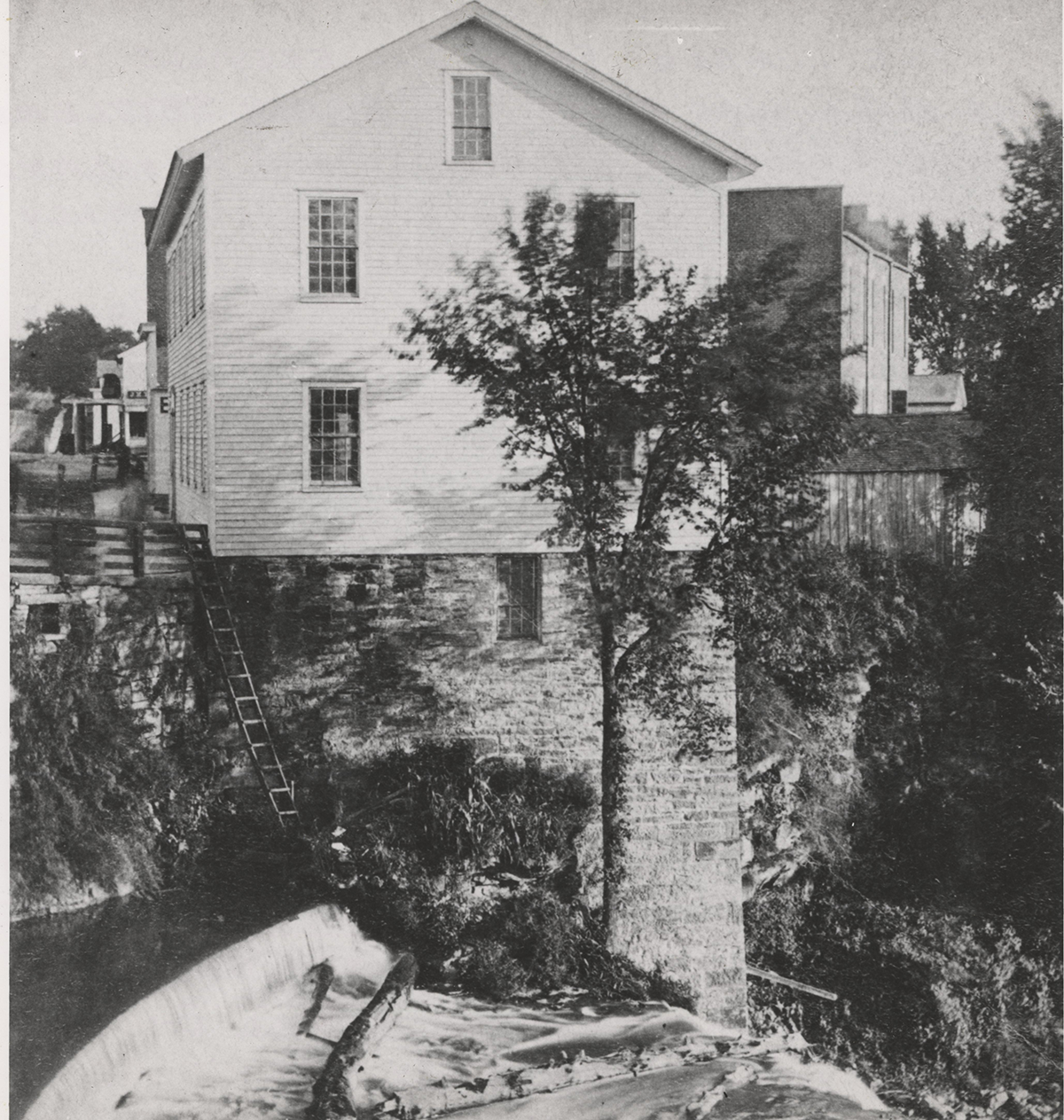
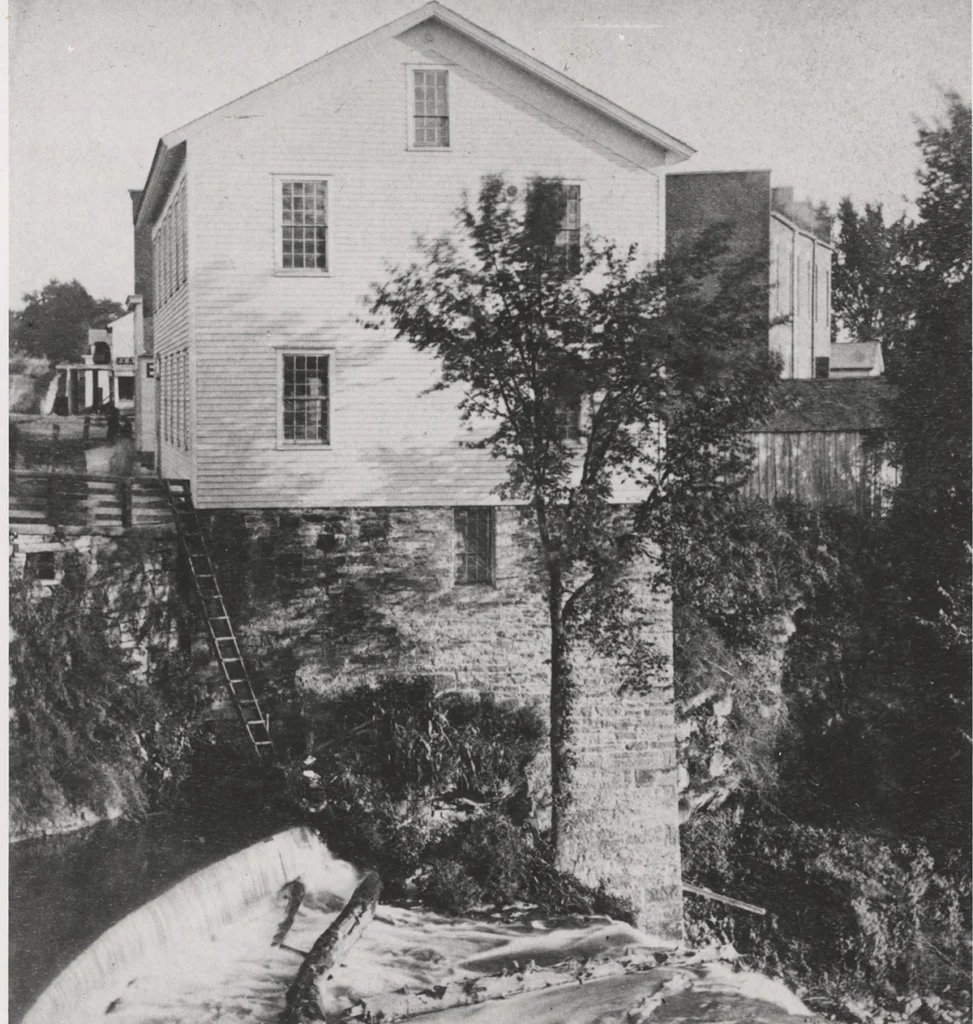
The site of the historic Fenkell Gristmill played an important role in the early development of Chagrin Falls. The property was originally purchased by Seth Handerson in 1833. In 1836, Handerson sold the land to Aaron Bliss, one of the most influential early settlers and business leaders in Chagrin Falls.
That same year, George Fenkell constructed a gristmill on the property, creating one of the village’s earliest water-powered industries.
Harnessing the Power of the Falls
To operate the mill, Fenkell built a small three-foot dam atop the natural falls of the Chagrin River. Water was diverted through a channel carved directly into the stone, directing the flow to a waterwheel that powered the mill’s machinery.
This innovative use of water power allowed the mill to grind grain for local farmers and helped support the growing agricultural economy of the surrounding region.
Changing Ownership Through the Years
Like many early industrial properties in Chagrin Falls, the Fenkell Gristmill passed through the hands of several owners over the decades. In 1867, Washington Gates and David Spears purchased both the mill and the surrounding property.
Under their ownership, the mill continued to serve as an important local business while contributing to the economic growth of the village.
Washington Gates and the Sales Office Addition
In 1874, Washington Gates expanded the operation by constructing a sales office just north of the gristmill. The building was erected directly above the natural falls and covered approximately twenty feet of the waterfall’s crest beneath the structure.
A Controversial Construction Project
The new building sparked considerable debate among local residents. Many townspeople objected to the office’s location, believing it detracted from the beauty of the falls and infringed upon one of Chagrin Falls’ most treasured natural landmarks. Despite the criticism, the building remained.
From Fenkell Gristmill to Chagrin Falls Mills
Washington Gates operated the mill until 1884, when he sold the business to his son, William Gates. Following the transfer, the operation became known as the Chagrin Falls Mills.
As ownership changed again, the business was acquired by Muggleton and Burt and renamed the Chagrin Falls Roller Mills.
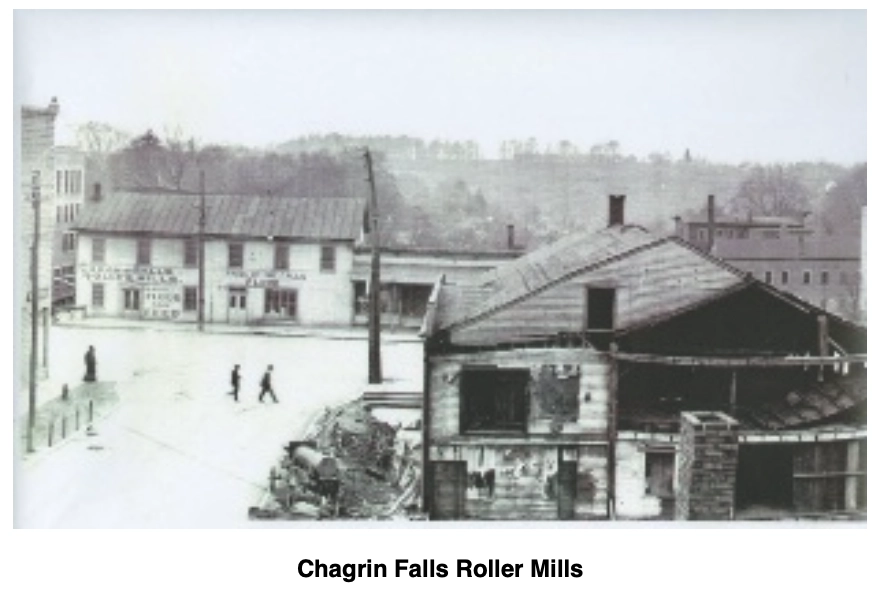
The facility continued milling operations into the 1920s. It then became the Farmers Exchange Company. Over its history, the business served local farmers and businesses for nearly a century.
Decline and Closure of the Mill
By the early twentieth century, advances in transportation and large-scale industrial milling reduced the need for small local gristmills. Operations gradually declined, and by 1931 the mill stood idle and vacant.
After nearly 95 years of service, one of Chagrin Falls’ oldest industrial landmarks had reached the end of its productive life.
Creation of High Falls Park
In 1931, the Village of Chagrin Falls purchased the property and demolished the former gristmill. The removal of the aging industrial structures opened the area surrounding the falls and allowed the village to create what is now known as High Falls Park.
The project preserved public access to one of the community’s most scenic and historic locations while transforming a former industrial site into a public gathering place.
The Building That Became the Popcorn Shop
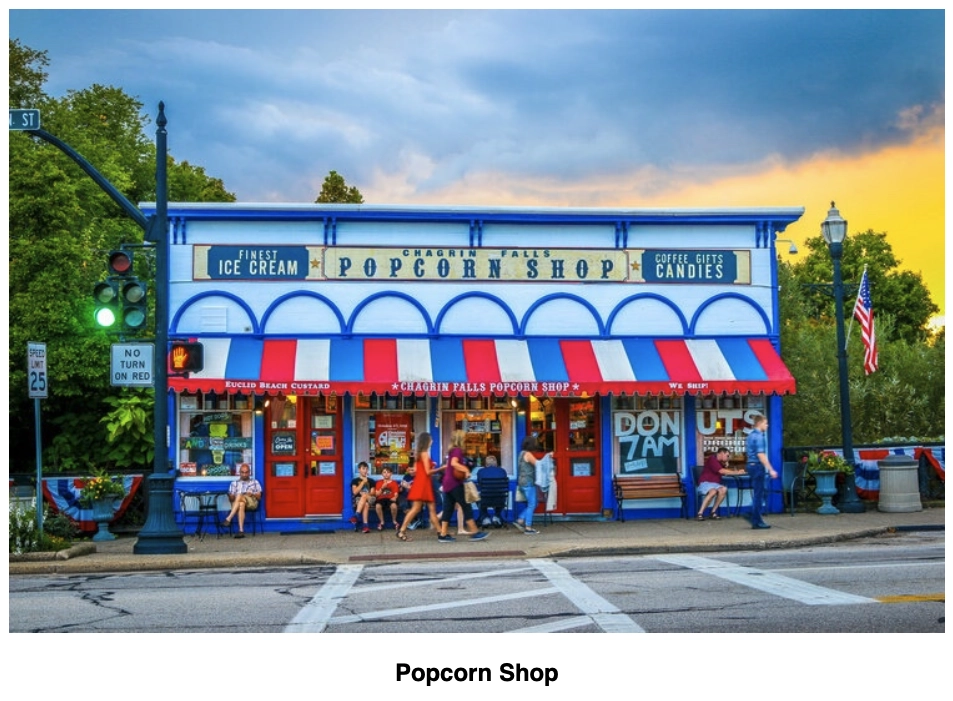
Although the gristmill itself was demolished, the sales office built by Washington Gates in 1874 was spared. Over time, the building was repurposed and eventually became the famous Popcorn Shop, one of the most recognizable landmarks in downtown Chagrin Falls.
Today, the structure stands as a reminder of the village’s industrial past and its long connection to the power of the Chagrin River.
Legacy of the Fenkell Gristmill
The Fenkell Gristmill was one of the earliest and most significant water-powered industries in Chagrin Falls. From its construction in 1836, the site played a vital role in the village’s economic development. Its transformation into High Falls Park and the preservation of the Popcorn Shop building continue to connect modern visitors with nearly two centuries of Chagrin Falls history.